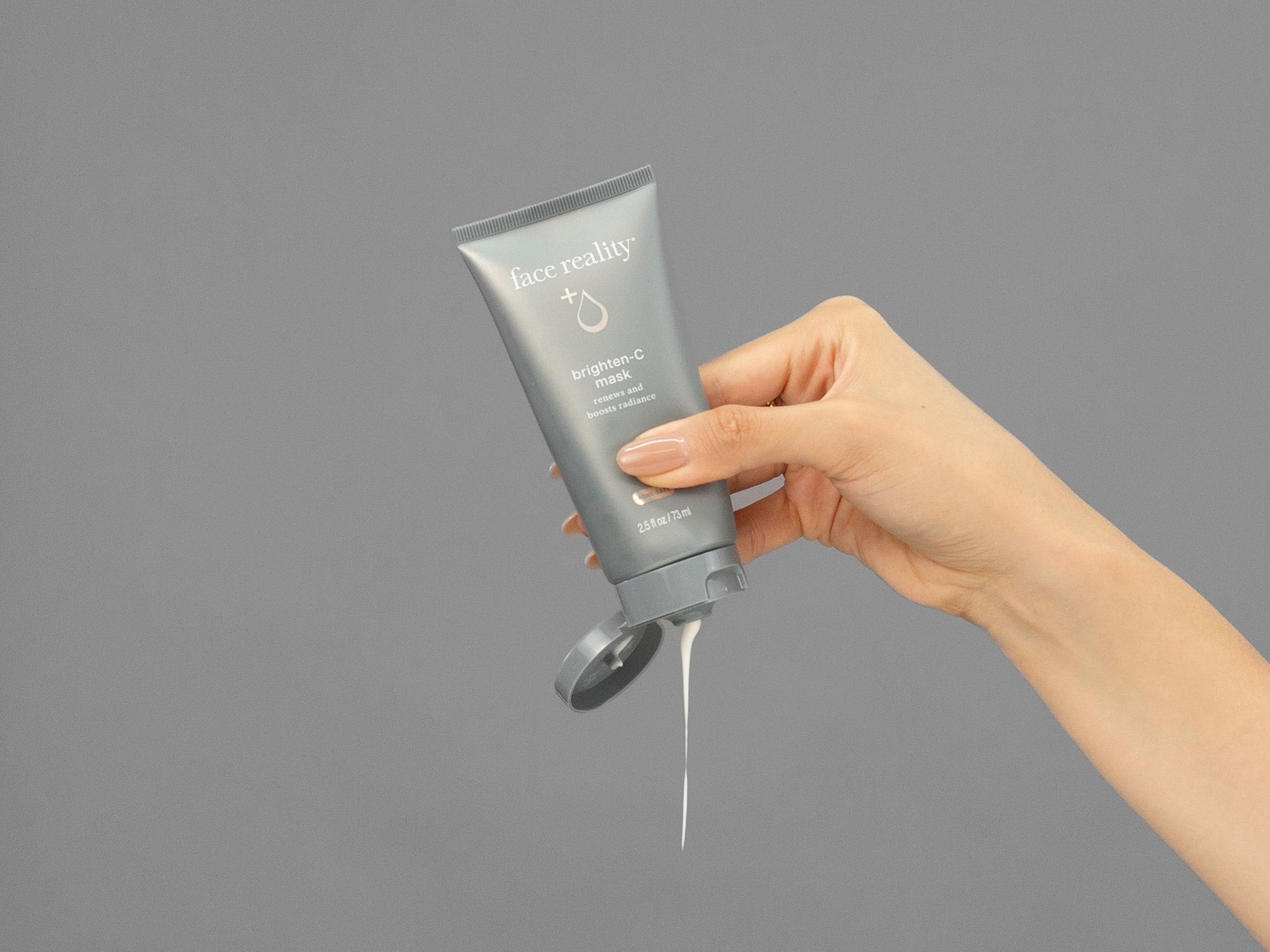
What is in it, and does vitamin C help melasma?
Vitamin C helps melasma, but not the way most products deliver it. Most are built around one high-strength active. The Face Reality Brighten-C Mask spreads the work across three pigment pathways at gentler concentrations, in a base that hydrates rather than strips. For melasma that is the whole argument.
Vitamin C (L-ascorbic acid) is the antioxidant here. It protects against free radical damage, supports collagen, and evens tone over time. It is also the reason this is a weekly treatment and not a daily one.
Diglucosyl gallic acid blocks pathways involved in melanin production and is very well tolerated. In melasma, tolerance is not a nice-to-have. A brightener you abandon in week four does nothing at all.
Nonapeptide-1 reduces melanin production upstream. It regulates rather than bleaches, and it works slowly by design.
Behind those sit undecylenoyl phenylalanine, which slows new pigment from forming, and Rumex occidentalis extract, which soothes. Then glycerin, sodium hyaluronate and safflower seed oil. That last group is easy to skim past and it is the reason reactive skin can use the vitamin C at all.
Two details matter specifically for melasma. No fragrance, and every ingredient non-comedogenic. Reactive skin gets through a full course of this where it would quit a stronger serum in week three.