Azelaic acid or hydroquinone: which is better for melasma?
Hydroquinone fades pigment faster. Azelaic acid is easier to keep using, and in a condition measured in months rather than weeks, that difference decides more outcomes than potency does.
Hydroquinone is the long-standing benchmark and it works. The problems are that it irritates a lot of people, it is generally used in supervised cycles rather than indefinitely, and stopping it can be followed by pigment returning. On skin that inflames easily, the irritation itself can drive the pigment you are treating.
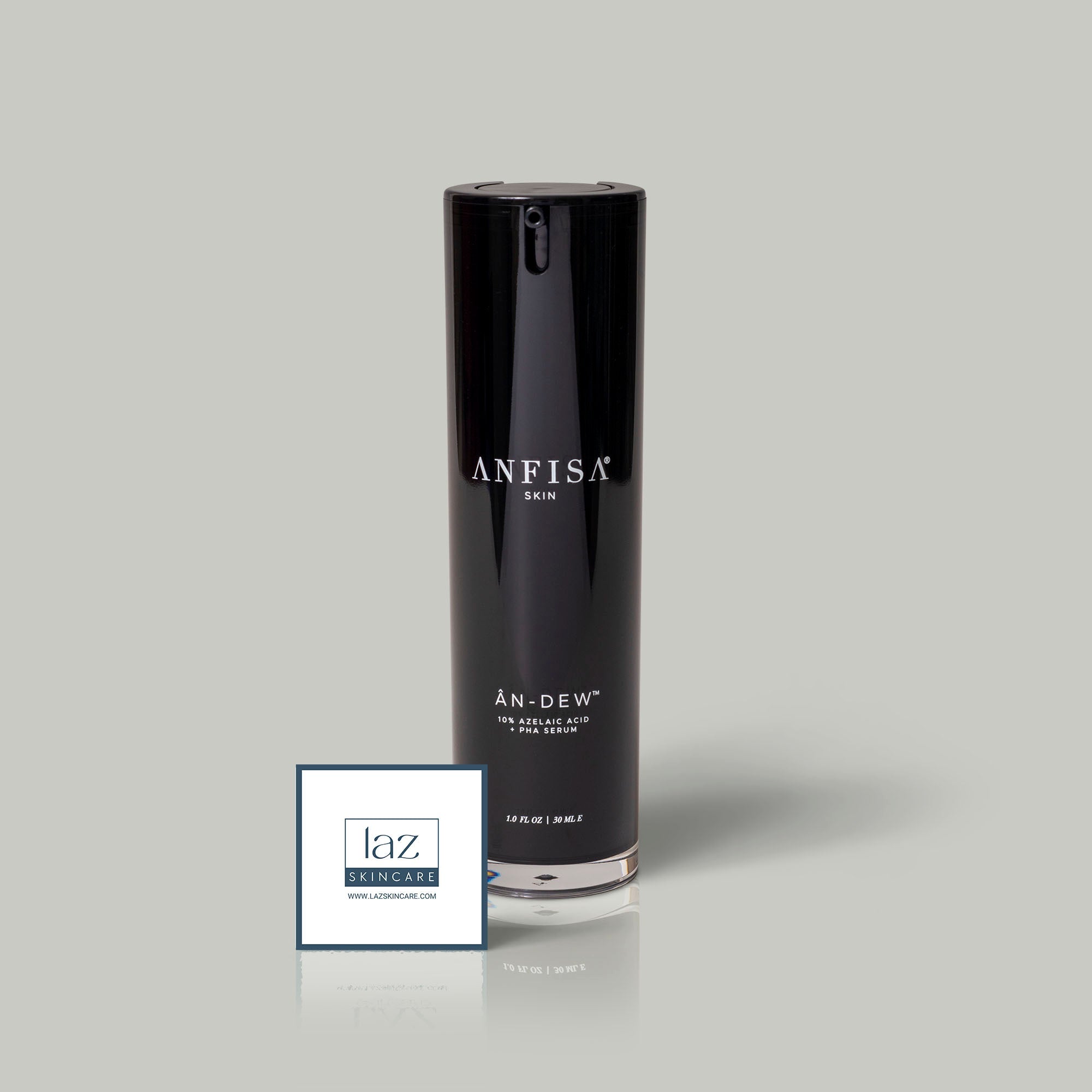
The Anfisa ÂN-DEW takes the other route, spreading the work across three ingredients at strengths the skin can live with.
Azelaic acid inhibits tyrosinase, the enzyme driving melanin overproduction, and it is anti-inflammatory at the same time. For melasma that pairing is unusually well suited, because it treats the pigment and one of its triggers together. It also does not make skin more sun-sensitive, which many brightening actives do.
Hexylresorcinol works on the same enzyme by a different mechanism and is often positioned as the gentler alternative to hydroquinone, without the same irritation or rebound risk. Two ingredients hitting one pathway from two directions beats one ingredient hitting it hard.
Gluconolactone clears pigmented cells from the surface slowly. A stronger AHA would clear them faster and inflame the skin doing it.
If your skin tolerates hydroquinone under a dermatologist's supervision, it remains a legitimate option and I would not talk you out of it. This is the answer for everyone whose skin does not.