Deep Dive7 min read

A damaged barrier rarely announces itself. One week your products are fine, the next your moisturiser stings, makeup sits strangely, and you are breaking out somewhere you never break out. By the time it is obvious, the damage is usually weeks old.

Laziza Strait, licensed esthetician at LAZ Skincare, holding a bottle of Pavise Bioadaptive Stress Repair.
What I reach for when skin needs to heal and keep working at the same time.

The short answer

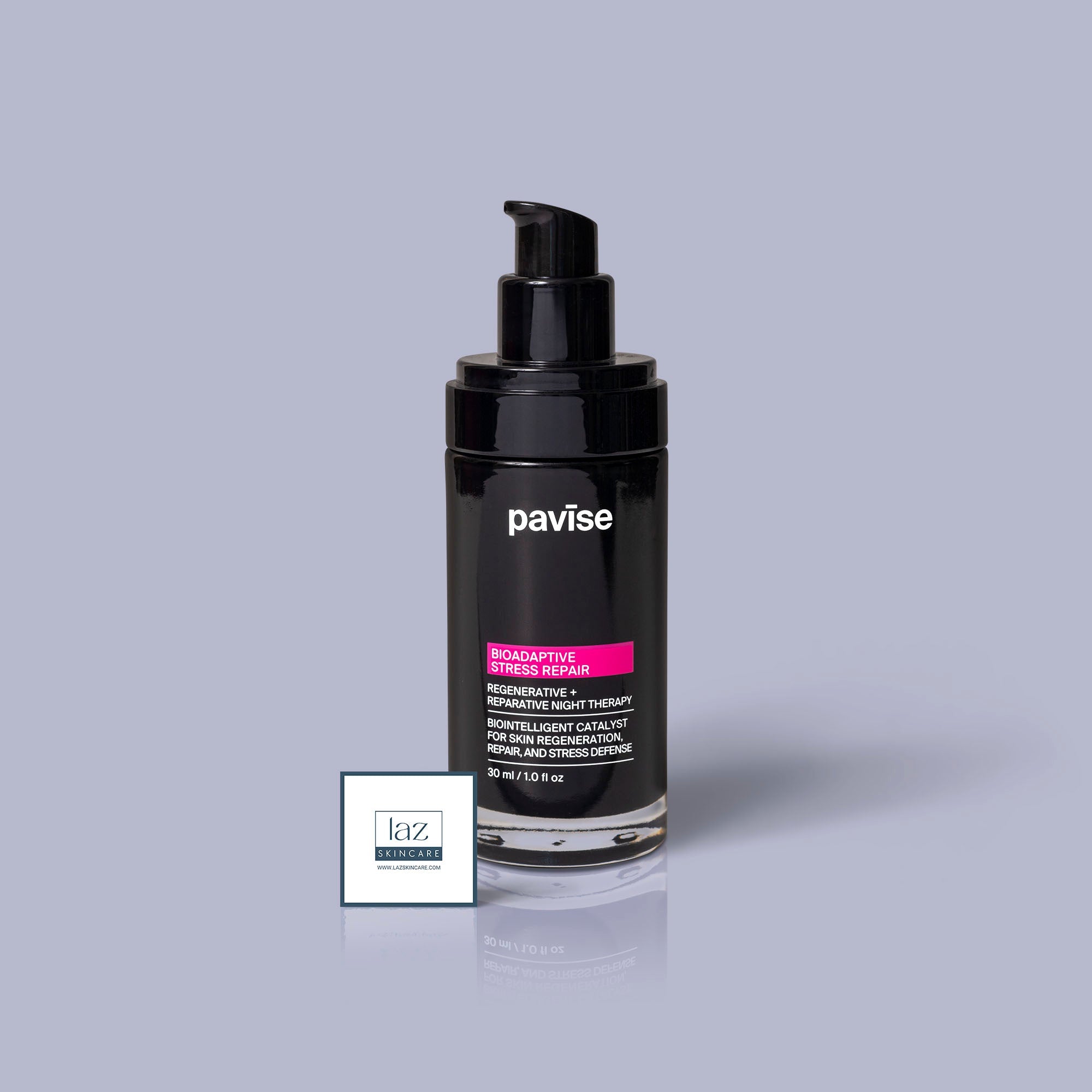
The Pavise Bioadaptive Stress Repair is a cream-serum hybrid I use on skin that needs to heal and keep working at the same time. Ceramides and cholesterol to rebuild the lipid layer, calming botanicals to bring reactivity down, antioxidants for the oxidative stress underneath. It feels weightless going on, which matters when skin is too reactive to tolerate anything heavy.

One to two pumps after your serums, once or twice a day. For most people it replaces moisturiser rather than joining it.

It is not a rescue balm you use for a week. Barrier repair takes four to six weeks of consistency, and it takes leaving your actives alone while that happens. The second part is where most people fail.

How do you know your skin barrier is damaged?

Your barrier is the lipid layer holding water in and irritants out. When it breaks down you get sensitivity, acne flares, redness, and a dryness that will not respond to moisturiser. The causes I see most in the clinic:

  • Overuse of actives, usually exfoliants or a retinoid pushed too fast
  • Harsh weather: wind, cold, and UV
  • Post-procedure skin, after lasers, microneedling or peels
  • Irritation or an allergic reaction to a product
  • Stress, travel, and poor sleep, which people underestimate

Most people do not realise the barrier is compromised until well after the fact. The tell is usually a product you have used for years suddenly stinging. That is not the product changing. That is your skin losing the ability to tolerate it.

The texture of Pavise Bioadaptive Stress Repair spread across the back of a hand.
Weightless going on, which matters when skin is too reactive to tolerate anything heavy.

What is in it, and what each part does

Most barrier products stop at occlusion. They sit on top and slow water loss, which helps, but nothing underneath gets rebuilt. The Pavise Bioadaptive Stress Repair works on four fronts at once.

Barrier builders. Five ceramides (NP, AG, AP, NG, EOP) rebuild the lipid matrix itself, which is what actually reduces water loss and seals irritants out. Cholesterol and squalane mimic the skin's own sebum and restore suppleness without clogging anything.

Calming agents. Allantoin and bisabolol take redness and irritation down. Milk thistle, licorice root and chebula extracts reduce the underlying reactivity rather than just masking the flush.

Brightening peptides. Tranexamic acid, alpha-arbutin and 4-butylresorcinol address the discoloration that follows barrier disruption. Nonapeptide-1 and oligopeptides target melanin production gently enough for skin that is already irritated. This is the part most repair creams skip, and it is why you do not have to choose between healing now and fixing marks later.

Environmental defense. Resveratrol, astaxanthin and superoxide dismutase work on oxidative stress before it becomes visible damage. Marine and algae extracts support cellular energy, which compromised skin is short on.

What I have seen in practice

I have used this on clients recovering from microneedling, on seasonal barrier disruption that arrives every February, and in cases of perioral dermatitis. What stands out is how fast it calms things down without stalling the longer repair.

Clients with a long history of sensitivity usually tolerate it, which is not something I can say about most products in this category.

If you have never found the line between moisturised and overreactive, this is the product I would try first.

Where it is the wrong call: an active allergic reaction or a rash you cannot explain. That needs a diagnosis, not a cream.

Laziza Strait holding a bottle of Pavise Bioadaptive Stress Repair beside her face.
One to two pumps, after serums. For most skin it replaces moisturiser.

What to do

  1. Cleanse with lukewarm water. Not hot, and not twice if once will do.
  2. Apply 1 to 2 pumps of the Pavise Bioadaptive Stress Repair after your serums, once or twice daily.
  3. Use it as your final step at night, or under SPF in the morning.
  4. Keep it off the same day as exfoliating actives while you are recovering.

Four things outside your routine that matter as much as the cream:

  • Pause acids and retinoids entirely while the barrier rebuilds. Not reduce. Pause.
  • Drop the water temperature and stop double cleansing for now.
  • Run a humidifier through winter, especially if you have radiators.
  • Sleep. Most barrier repair happens overnight, and no cream compensates for four hours.

Expect comfort back within a week or two. Full repair runs four to six weeks, and the actives stay out for all of it.

Sources and further reading

Product discussed: Pavise Bioadaptive Stress Repair. Stocked because it is used in the clinic. The full ingredient list, size and pricing are on the product page.

Barrier recovery is not one-size-fits-all. If you are not sure where to start, book a consultation, in person at the NYC clinic or virtually.

Last reviewed