Account7 min read

Every peel you booked to fade those marks was quietly making more of them. That is not bad luck. It is the mechanism working exactly as it should, because pigment is a response to injury and a peel is an injury.

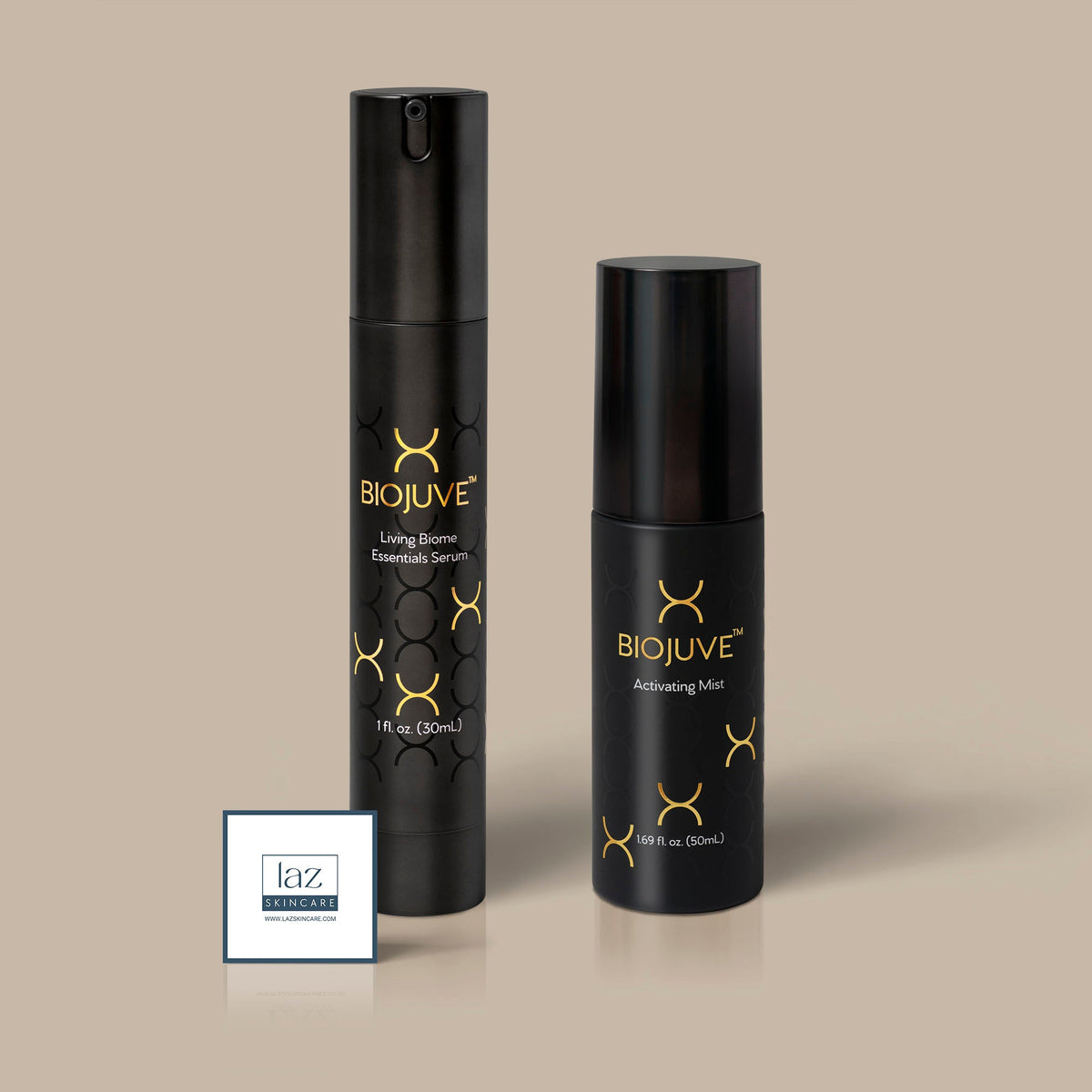
The Biojuve Living Biome Essentials Serum Duo, stocked by LAZ Skincare.
No brightener, no acid. On over-treated skin that is the point.

The short answer

The Biojuve Living Biome Essentials Serum Duo is what I use when someone has been treating their pigment aggressively and the pigment has responded by getting worse. It contains no brightener and no acid. It lowers inflammation and rebuilds the barrier, and the fading follows from that.

Serum then mist, at night, with everything else stripped out.

This is the slower road and I will not pretend otherwise. A tyrosinase inhibitor fades marks faster on skin that can tolerate one. This is for skin that has already proved it cannot, where the fastest route is the one that stops making new pigment.

Why did exfoliating make my dark spots worse?

Because pigment is what skin produces in response to inflammation, and exfoliation is controlled inflammation. On skin that pigments readily, a treatment aimed at removing marks can generate more of them than it clears.

The loop runs like this. A breakout leaves a mark. You exfoliate to shift it. The exfoliation irritates already-sensitive skin, which deposits fresh pigment. The marks look worse, so the treatment gets stronger, and each round adds more than it takes away.

Two things make this more likely:

  • Melanin-rich skin, where the pigment response to any injury is stronger and slower to clear.
  • A compromised barrier, which lowers the threshold at which something counts as an injury in the first place.

Over-exfoliation is a cause of post-inflammatory hyperpigmentation in its own right, not only a bad response to it. Plenty of the marks I see were never made by acne at all.

Which is why the first instruction is almost always to stop doing something rather than to start.

The Biojuve Living Biome Essentials Serum Duo from the LAZ Skincare range.
The first instruction is to stop something, not to start something.

What fades pigment without inflaming the skin?

Anything that lets the skin's own clearance process run without interruption. Skin removes excess pigment on its own, steadily, provided nothing keeps restarting the inflammation that produced it. The Biojuve Living Biome Essentials Serum Duo is built entirely around that idea.

Xycrobe live microbes restore the bacterial balance on the surface. A balanced microbiome runs less inflammation, and less inflammation means less new pigment while the existing marks clear.

Beta-glucan and aloe vera repair the barrier and settle post-breakout irritation. On skin that has been over-treated, this is the step that raises the injury threshold back to something normal.

Olive leaf and beet root extract bring antioxidants that neutralise inflammation and improve clarity. These are the closest thing in the formula to a brightening action, and they work by reducing the driver rather than blocking the pathway.

Sodium hyaluronate and glycerin keep things hydrated. Dry inflamed skin heals slowly, and slow healing means the pigment sits there longer.

The prebiotics stabilise the whole environment, which matters for preventing the next mark as much as fading the last one.

Read that list and notice there is no brightening agent in it. That is deliberate and it is the reason it works on skin that has rejected everything else.

How long before PIH starts to fade?

Three to six weeks for tone and texture to shift. The marks themselves fade gradually across months after that, and the older and deeper they are the longer it takes.

One client had lovely skin underneath and could not see it, because hormonal breakouts had left her marked and her instinct had been to exfoliate and peel. The marks had gone darker each time. We stopped every harsh treatment she was using and introduced this instead. Four weeks later the redness and the discolouration had both softened, and none of it involved peeling or irritation.

The hardest part of that plan was persuading her that doing less would work.

Who it does not suit: anyone whose skin tolerates actives well, who will fade marks faster with a direct pigment product. Anyone with marks that are red rather than brown. And anyone unwilling to pause the routine that caused this, because adding this on top of the peels achieves nothing.

Biojuve Living Biome Essentials Serum Duo, part of the LAZ Skincare range.
Pigment is a response to injury. Peels are an injury.

What to do

  1. Stop the peels, scrubs, acids and strong brighteners. All of them, not most of them. This is the actual treatment.
  2. Cleanse gently, morning and night. Nothing foaming and nothing exfoliating while the skin is healing.
  3. One pump of the Biojuve Living Biome Essentials Serum Duo serum into the hand at night, then three or four sprays of the activating mist onto it straight away.
  4. Massage over face and neck, then a light non-comedogenic moisturiser if you need one.
  5. Sunscreen every morning, reapplied. Without it none of the rest of this is worth doing.

When you eventually bring an active back, bring back one, and wait a fortnight before considering a second.

Tone and texture at three to six weeks. Marks fading over months. The signal that this is working is that new breakouts stop leaving marks as dark as the old ones did.

Sources and further reading

Product discussed: Biojuve Living Biome Essentials Serum Duo. Stocked because it is used in the clinic. The full ingredient list and current details are on the product page.

Working out whether your skin needs a brightener or a break is the single most valuable decision in a pigment plan, and it is difficult to make about your own face. Book a consultation, in person at the NYC clinic or virtually, and we will make it together.

Last reviewed