Correction7 min read

When a brightening serum stops working, almost nobody's first instinct is to stop using it. That instinct is exactly why melasma plateaus, because irritated skin manufactures pigment faster than any brightener clears it.

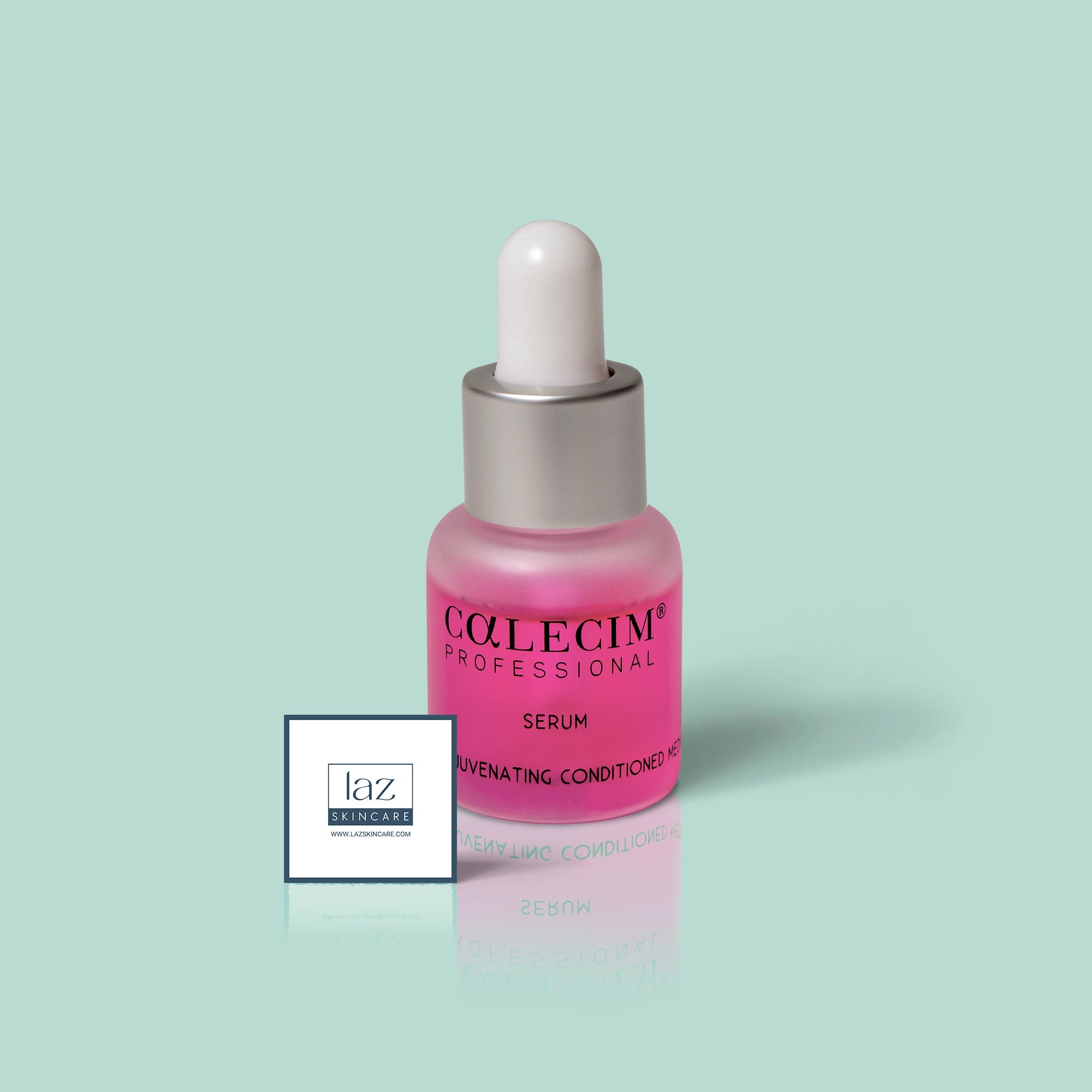
The Calecim Professional Serum, stocked by LAZ Skincare.
A reset step, not a brightener. It makes the brightener work again.

The short answer

The Calecim Professional Serum is what I use to reset melasma-prone skin that has become too reactive to treat. Growth factors and structural proteins to support repair, hyaluronic acid to keep things hydrated, and nothing in the formula that will provoke the pigment further.

One pipette on clean skin, first, once or twice a day.

Understand what this is not. It does not reduce pigment. There is no tyrosinase inhibitor in it and it will not fade a patch on its own. Its entire job is to get your skin back to a state where the products that do fade pigment become usable again. If you buy it expecting a brightener you will be disappointed, and fairly so.

Why has my melasma treatment stopped working?

Usually because the skin has become inflamed by the treatment itself, and inflammation is one of the things that drives melasma. You end up in a stalemate where the product is clearing pigment at one rate and provoking it at another.

The plateau has a recognizable shape:

  • Good progress for the first few weeks or months.
  • Results flatten. The skin starts feeling warm, tight or stingy where it used to feel fine.
  • A trigger arrives, often heat or a holiday, and the patches come back darker than they were.
  • The instinct is to use more, or something stronger, which accelerates the whole cycle.

Melasma is hormonally influenced and it flares from heat, stress and light, which are not things you can fully control. What you can control is how much irritation your own routine is contributing, and in a stalled protocol the answer is usually a lot.

So the move is counterintuitive. You stop treating the pigment for a while in order to treat it better afterwards.

The Calecim Professional Serum from the LAZ Skincare range.
One pipette, first, on skin that has had everything else removed.

What helps melasma-prone skin tolerate brightening treatment?

A stronger barrier and faster repair. Skin that recovers efficiently from irritation produces less pigment in response to it, which is the whole mechanism by which tolerance translates into results. The Calecim Professional Serum is aimed squarely at that and at nothing else.

PTT-6 is the conditioned media component, carrying growth factors and signaling molecules that support renewal and improve how efficiently skin recovers from inflammation. Inflammation is a root trigger of melasma, so recovering from it faster is not a side benefit here.

Soluble collagens and fibronectins reinforce the structure and reduce skin fragility. Fragile skin reacts to treatments that robust skin shrugs off, and melasma-prone skin is frequently more fragile than it looks.

Glycoproteins and albumin smooth and tighten the surface while the rest of the work happens underneath. The tightening is temporary and worth recognizing as such.

Hyaluronic acid keeps everything hydrated. Hydrated skin tolerates pigment correctors with less of a post-inflammatory response, which in a condition defined by post-inflammatory responses matters more than it sounds.

Notice what is absent. No acid, no retinoid, no brightener, no fragrance. For skin in a flare, absence is the active feature.

How do you reset after a melasma flare?

You pull everything active out, rebuild for a week or two, then reintroduce one thing at a time. It feels like losing ground and it is the fastest route back.

One client came in after a holiday where her melasma had worsened significantly. Her usual lightening serum had stopped doing anything and her skin felt hot and tight. We paused every active she was using and rebuilt the barrier with this instead. Ten days later the inflammation had settled and her tone was already more even, and we could bring the pigment-suppressing treatments back with far less risk of rebound.

Ten days of doing less bought back a protocol she had nearly abandoned.

Who it does not suit: anyone at the start of melasma treatment whose skin is calm, who does not need a recovery step yet and should spend their money on a pigment product instead. Anyone expecting this to fade patches by itself. And anyone unwilling to pause the routine that caused the plateau.

Calecim Professional Serum, part of the LAZ Skincare range.
No acid, no retinoid, no brightener. In a flare that absence is the point.

What to do

  1. Stop the brighteners, acids and retinoids for now. All of them. This is the part that works.
  2. Cleanse with something non-stripping, then apply one pipette of the Calecim Professional Serum as your first step, once or twice daily.
  3. Calming moisturizer over the top. Broad-spectrum sunscreen every morning, reapplied, tinted if you can, since visible light drives melasma too.
  4. Give it ten days to two weeks of nothing else before you judge anything.
  5. Reintroduce one pigment treatment, at a lower frequency than before, and keep this serum underneath it.

Manage heat as seriously as you manage light while you are resetting. Saunas, steam and hot workouts all count.

Calming within ten days. Clarity and tone at three to six weeks. The real measure is whether your skin can hold a brightening product again without going hot, because that is what determines the next six months.

Sources and further reading

Product discussed: Calecim Professional Serum. Stocked because it is used in the clinic. The full ingredient list and current details are on the product page.

Knowing whether you have plateaued because of irritation or because the plan was never right is difficult to judge from inside it. Book a consultation, in person at the NYC clinic or virtually, and we will work out which it is before you change anything else.

Last reviewed