Deep Dive7 min read

Glycation is the ageing process nobody sells you a product for, because the honest version of the advice is partly about what you eat. It shows up as skin that has gone stiff rather than lined, and most people notice it as looking tired without being able to say why.

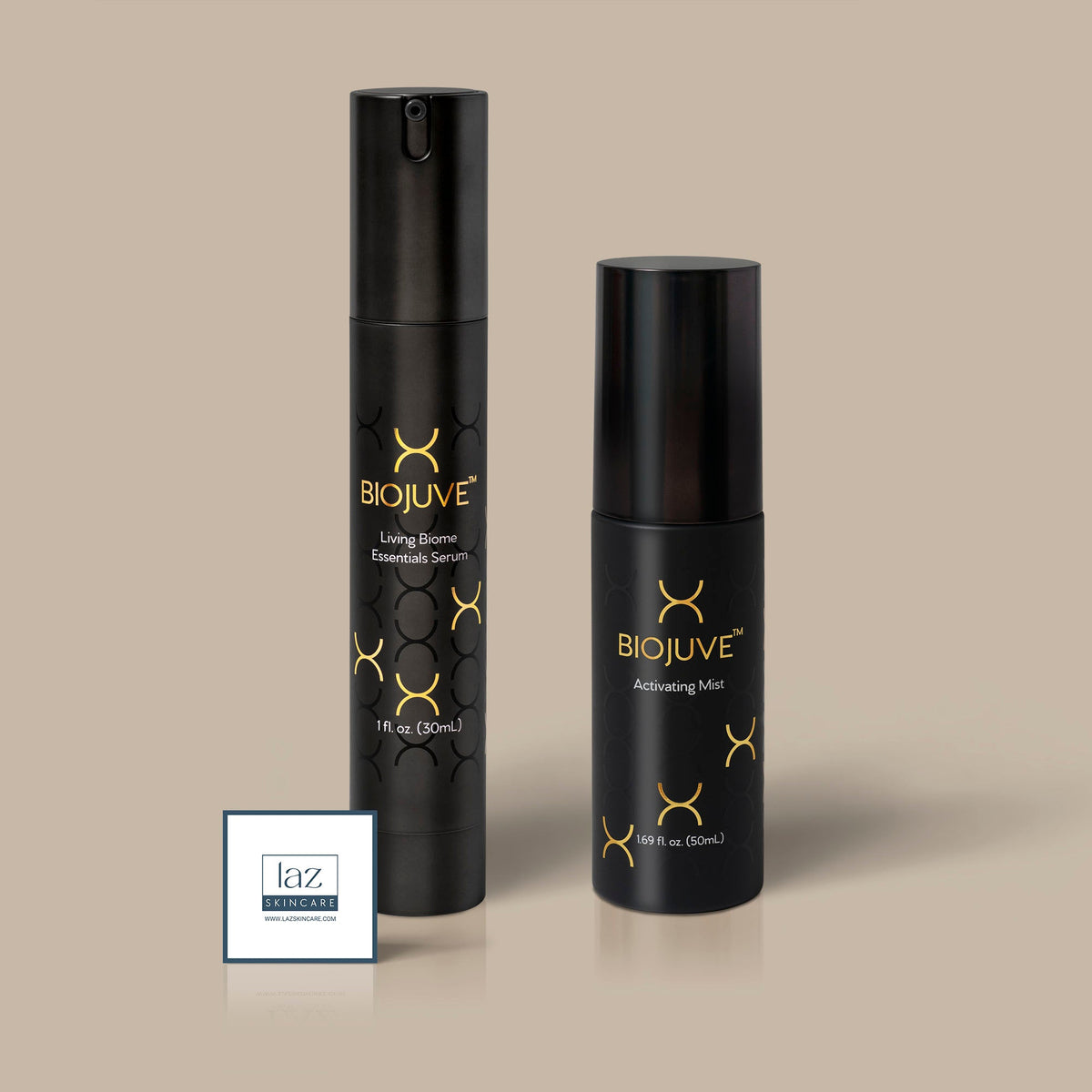
The Biojuve Living Biome Essentials Serum Duo, stocked by LAZ Skincare.
For skin that needs resilience rather than resurfacing.

The short answer

The Biojuve Living Biome Essentials Serum Duo is what I use in an age-supportive protocol when the skin needs resilience rather than resurfacing. Live microbes, prebiotics, beet root and olive leaf for oxidative stress, and a hydrating base that keeps stiff skin supple.

Serum then mist, at night, then a ceramide or peptide cream over the top.

Now the honest part. Glycation damage is not undone by anything you apply. The cross-links that have formed in your collagen are essentially permanent, and every product claiming to reverse them is overselling. What this addresses is everything downstream of the damage, which is worth doing and is not the same as repair.

What is glycation, and does sugar age your skin?

Glycation is sugar molecules binding to proteins. In skin, the proteins in question are collagen and elastin, and once sugar attaches to them they stiffen and turn brittle. So yes, sugar ages skin, though not in the direct way the phrase usually implies.

Healthy collagen is springy. Glycated collagen is not. It holds its shape badly, it does not recover when the skin is moved, and it resists the normal turnover that would otherwise clear and replace it.

That is why the visible signs are unusual:

  • Stiffness. Skin that does not bounce back when you press or smile.
  • A crepey texture that exfoliating does not touch, because the problem is beneath the surface being exfoliated.
  • Dullness that persists through every brightening product you own.
  • Lines that feel deeper than they look, set into the structure rather than sitting on it.

UV and pollution accelerate the whole process, and inflammation makes it worse again. Those are the parts a routine can influence.

The part it cannot influence is your blood sugar, and if that is on a rollercoaster no serum is going to out-run it. I am an esthetician and that conversation belongs with your doctor, but I am not going to pretend the answer is entirely on my shelf.

The Biojuve Living Biome Essentials Serum Duo from the LAZ Skincare range.
It slows what is coming. It does not undo what has already set.

What helps skin that has lost its bounce?

Reducing the oxidative stress and inflammation that drive further glycation, and keeping the skin hydrated enough that stiff tissue stays supple. You are protecting what is left rather than restoring what has gone. The Biojuve Living Biome Essentials Serum Duo works on that side of the equation.

Xycrobe live microbes produce their own antioxidants and peptides once established on the skin. A supported microbiome handles environmental stress better, and environmental stress is one of the accelerators here.

Beet root extract is the ingredient I would highlight for this concern specifically. It improves hydration and smoothness, and it carries antioxidants aimed at the oxidative stress feeding glycation damage.

Olive leaf extract is anti-inflammatory and antioxidant, supporting repair and settling the stress-related dullness that comes with this pattern.

Sodium hyaluronate, beta-glucan and glycerin keep the tissue plump. Glycated collagen is stiff, and stiff tissue that is also dehydrated looks considerably worse than stiff tissue that is well hydrated. This is the fastest visible win available.

Inulin and alpha-glucan oligosaccharide feed the microbial population, which in turn helps regulate the inflammation that damages collagen further.

Sunscreen does more for glycation than anything in this paragraph. It is unglamorous and it is true.

How long before glycation-related dullness improves?

Four to six weeks for glow, texture and tone. The structural stiffness underneath does not resolve on that timescale or any other, so the realistic goal is skin that looks and feels better while the underlying change is slowed rather than reversed.

One long-standing client noticed her skin looking tired and dull even though her acne had long since cleared. Looking properly, the signs were early glycation. Fine lines that felt deeper than they appeared, skin that did not spring back, and a dullness that had survived a lot of exfoliation. We moved the routine toward microbiome recovery instead of adding actives. Within a few weeks her skin was softer and brighter and her makeup was sitting properly again.

She had been exfoliating a surface problem that was not on the surface.

Who it does not suit: anyone expecting firmness restored, which is a different conversation involving different tools. Anyone who wants a fast, visible change. And anyone still running an aggressive resurfacing routine, since the inflammation from that works directly against what this is trying to do.

Biojuve Living Biome Essentials Serum Duo, part of the LAZ Skincare range.
Glycated collagen is stiff. Hydrated stiff tissue still looks better.

What to do

  1. Ease off the exfoliation. Glycation sits below where any acid reaches, and irritating the surface accelerates the damage underneath it.
  2. Cleanse gently at night without stripping.
  3. One pump of the Biojuve Living Biome Essentials Serum Duo serum into the hand, then three or four sprays of the activating mist onto it immediately.
  4. Massage over face and neck, then follow with a ceramide-rich moisturiser or a peptide cream for firmness support.
  5. Broad-spectrum sunscreen every morning. UV accelerates glycation, and this is the single highest-value step on the list.

Antioxidants in the morning are worth adding if you are not already using them, since oxidative stress and glycation feed each other.

Glow and texture at four to six weeks. Beyond that, judge it on how slowly things change rather than how much they improve. Glycation is managed across years, not corrected across months.

Sources and further reading

Product discussed: Biojuve Living Biome Essentials Serum Duo. Stocked because it is used in the clinic. The full ingredient list and current details are on the product page.

Glycation, dehydration and laxity all read as tired skin and they are managed completely differently. Book a consultation, in person at the NYC clinic or virtually, and we will identify which is doing the most work on your face.

Last reviewed