Correction7 min read

No cream lifts. If a jar promises to lift your jawline you are buying hope at a premium. What a good cream does is make skin thicker, better hydrated and more resilient, and that changes how lines read more than people expect.

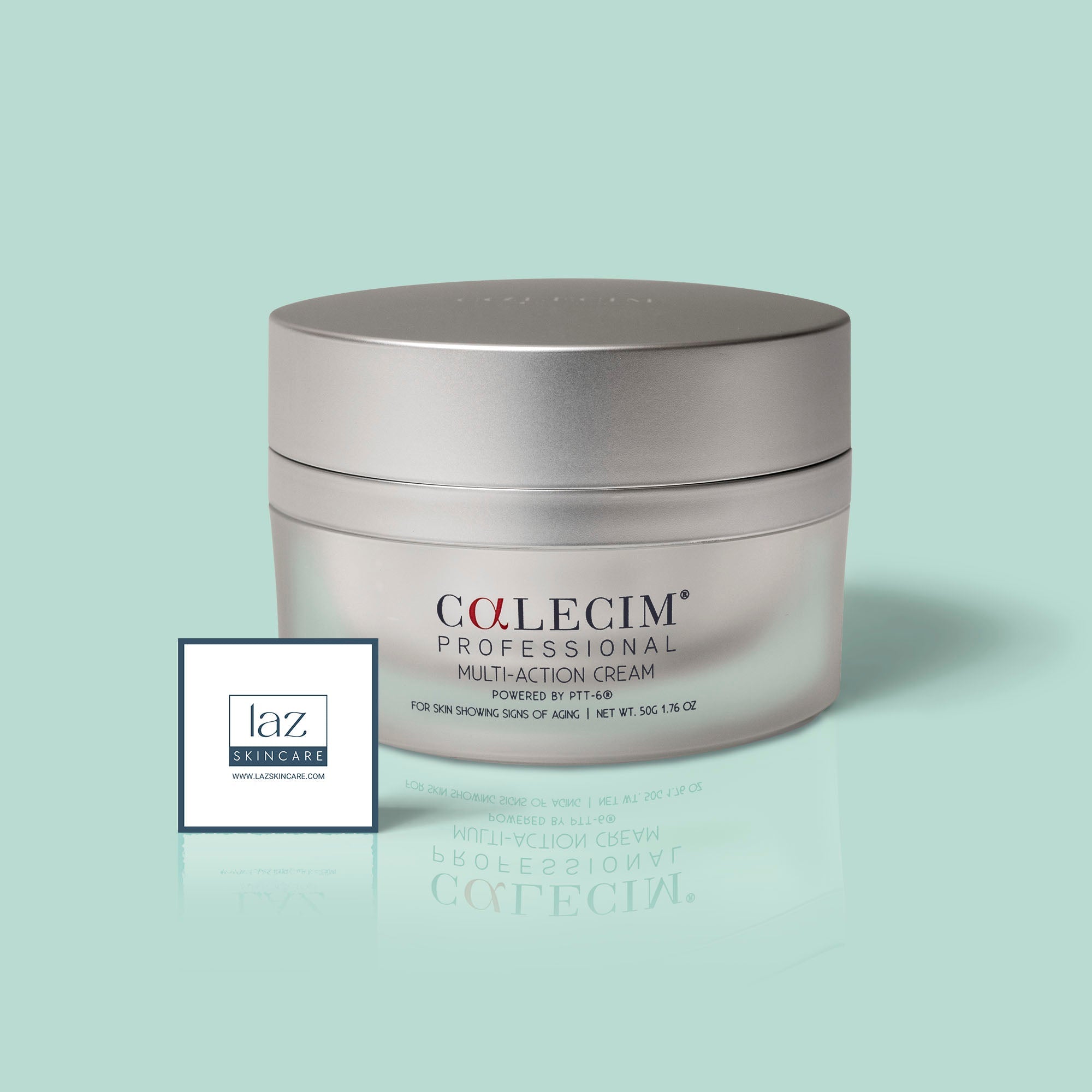
The Calecim Multi-Action Cream, stocked by LAZ Skincare.
A repair cream carrying a protein fraction. Useful, and not a lift.

The short answer

The Calecim Multi-Action Cream is what I use for early loss of density in skin that is also dry. Conditioned media and structural proteins for the repair side, and a fatty acid base that rebuilds a barrier most firming products ignore entirely.

Morning and night, taken past the jawline onto the neck.

It will not tighten a jawline and it does not compete with a retinoid on fine lines. Read the ingredient list and what you find is an excellent barrier cream carrying a protein fraction. That is a genuinely useful thing to own. It is not a substitute for the treatments that change structure.

Can a moisturizer actually firm skin?

It can make skin look and feel firmer without changing anything structural, and the distinction is worth understanding before you spend money on the word firming.

Two different things get called laxity:

  • Surface quality. Thin, dehydrated, depleted skin that has lost its bounce. This responds well to topicals, because you are restoring water, lipids and dermal support.
  • Structural laxity. Collagen architecture that has degraded, fat pads that have shifted, bone that has remodeled. Nothing you apply reaches any of that.

A simple check. Look in a mirror lying down, then standing. If things look considerably better lying flat, gravity is acting on tissue that has lost its support and you are in the second category. If the difference is small, what you have is surface quality and a cream is a reasonable answer.

Most people in their late thirties and forties have some of both. The topical work is still worth doing, because thicker better-hydrated skin drapes differently over whatever is underneath it.

The Calecim Multi-Action Cream from the LAZ Skincare range.
Taken past the jawline onto the neck, which is usually where it stops.

Which ingredients support firmness in a cream?

Lipids that rebuild the barrier, proteins the skin can use as material, and enough hydration to plump the surface. The Calecim Multi-Action Cream has a short list and it is easy to see what you are buying.

PTT-6 is the conditioned media fraction, carrying growth factors and signaling proteins that prompt the skin toward collagen and elastin production rather than supplying either directly.

Soluble collagens, glycoproteins and fibronectins are the structural proteins. These are raw material and organizational signal, and they are the part clients describe as skin feeling stronger rather than looking different.

Oleic, linoleic and palmitic acids make up much of the base. Linoleic acid is an omega-6 fatty acid and it is the one that matters most for barrier repair, since depleted skin is frequently short of it. This is why the cream suits dry and mature skin so well and why oily skin should use it sparingly.

Hyaluronic acid, lactic acid and potassium lactate handle water. They sit at the end of the list and they are humectants here rather than exfoliants, so do not expect any resurfacing from the lactic acid.

Tocopherol gives antioxidant cover and helps the lipid content stay stable.

Notice what is absent. No retinoid, no vitamin C, no peptides beyond the protein fraction. This is a repair cream, and its job is to sit underneath the products doing the correcting.

How long does it take to see firmer skin?

Comfort and plumpness within a week. Density and resilience across two to three months. Anything described as firming that arrives faster than a week is hydration, which is real and temporary.

One client in her mid-forties wanted better jawline definition and smoother fine lines without injectables. We built a program around microneedling with this used nightly at home. By her third session her skin felt firmer and more hydrated and looked visibly smoother, particularly around the eyes and cheeks.

I want to be accurate about that. The microneedling did the structural work. The cream made the recovery better and the skin more resilient between sessions, which is a real contribution and not the same as being the treatment.

Who it does not suit: oily or congested skin, which will find it heavy. Anyone with established laxity expecting a cream to address it. And anyone wanting maximum results from topicals alone, who should be building around a retinoid instead.

Calecim Multi-Action Cream, part of the LAZ Skincare range.
No retinoid, no vitamin C. This sits underneath the products that correct.

What to do

  1. Apply the Calecim Multi-Action Cream morning and night, over your corrective serums.
  2. Combination or oily skin: use it alone as your moisturizer. Dry skin: use it as a treatment layer underneath a richer cream.
  3. Take it past the jawline and onto the neck. The neck ages faster and gets ignored, and this is a good vehicle for reaching it.
  4. Use it after microneedling, radiofrequency or laser once your practitioner clears you, to support recovery between sessions.
  5. Broad-spectrum sunscreen every morning. UV degrades collagen faster than any cream rebuilds it.

If firmness is the actual goal, this belongs in a plan alongside a retinoid or professional treatment rather than in place of one.

Plumpness in days. Density at two to three months. Judge it on how the skin feels under your fingers as much as on what you can see.

Sources and further reading

Product discussed: Calecim Multi-Action Cream. Stocked because it is used in the clinic. The full ingredient list and current details are on the product page.

Whether your firmness concern is surface quality or genuine structural laxity decides whether a cream is worth buying, and it is hard to judge in your own mirror. Book a consultation, in person at the NYC clinic or virtually, and I will tell you which you are dealing with.

Last reviewed