Account7 min read

If you pigment easily and nobody asked about that before choosing your settings, the aftercare is not the problem. Skin that marks after inflammation can absolutely have a course of treatments. It has to be planned differently from the first appointment.

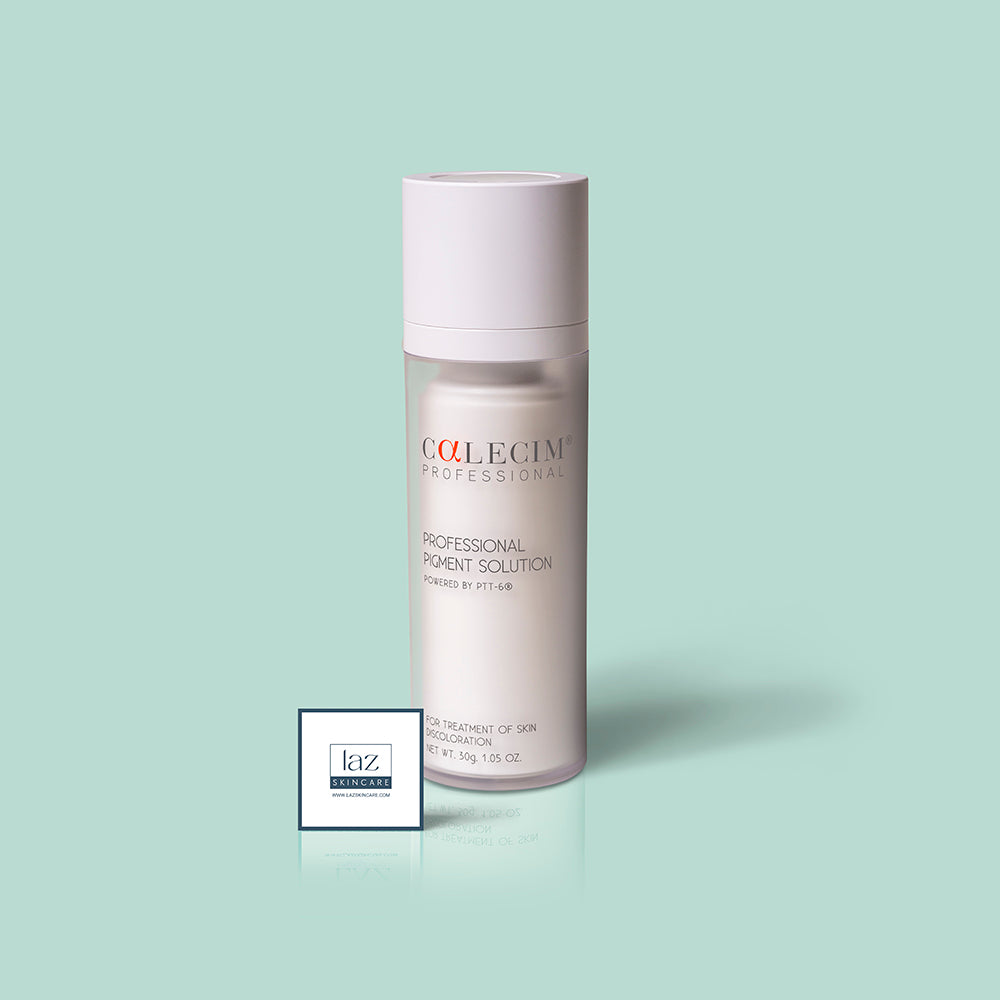
The Calecim Professional Pigment Solution, stocked by LAZ Skincare.
Run through the healing phase after every session, not just the first.

The short answer

The Calecim Professional Pigment Solution is what I put clients on through the healing phase after each session when they have a history of pigmenting. It works on inflammation and on melanin at the same time, which is the combination that matters in the days when both are running high.

From the day after treatment, once daily at night, building to twice.

It does not change your settings, your intervals, or your practitioner's judgment, and those decide far more than any serum does. Follow the aftercare you were given ahead of anything written here, and if it conflicts, theirs wins.

Can I have microneedling if I hyperpigment easily?

Yes, and it needs to be planned rather than simply booked. The treatment creates controlled inflammation, inflammation raises melanin activity, and skin that already responds strongly to injury responds strongly to this one too.

Higher Fitzpatrick types carry more risk here, and so does anyone with a history of marking after breakouts. That is information your practitioner needs before they choose depth and intensity, not after.

What a well-planned series looks like:

  • Conservative settings early, with intensity increased only once your skin has shown how it heals.
  • Longer intervals between sessions, so each one starts from calm skin rather than skin still recovering from the last.
  • Pigment-aware aftercare running through the whole course rather than only after the first session.
  • Strict sun avoidance between appointments, which is the part people underestimate.

Ask directly how they are adjusting for your skin. A clear answer is a good sign. A vague one tells you something too.

The Calecim Professional Pigment Solution from the LAZ Skincare range.
From the day after, once any pinpoint bleeding has resolved.

What protects skin from pigment during a treatment series?

Shortening the inflammatory phase and holding melanin production down while it runs. Doing both at once is the requirement, and it is why a plain recovery cream and a plain brightener each only get you halfway. The Calecim Professional Pigment Solution does both.

PTT-6 regulates inflammation and drives regeneration. In the healing window this is the piece keeping recovery on schedule, and a shorter recovery means less pigment deposited.

Niacinamide and tranexamic acid calm the skin and interrupt melanin signaling without stinging or stripping. That tolerability is the whole reason they can go on skin two days after a procedure at all.

Alpha-arbutin, arbutin and 4-butylresorcinol inhibit tyrosinase to stop new pigment forming. Gentle enough for continuous use across a course of treatments, which is exactly the window where you need them working.

Sodium ascorbyl phosphate and ascorbyl palmitate give antioxidant protection and brightening in forms that healing skin tolerates well.

Allantoin, green tea and glutathione keep things soothed, while the glycoproteins, soluble collagens and fibronectins help the barrier close faster and stronger.

No acids, no retinoid, no fragrance. On skin two days past a procedure that matters more than anything on the list above.

Does the pigment risk build with each session?

It does if each session starts on skin that has not finished recovering from the last, and it does not if you let the skin close properly in between. That is why intervals matter as much as settings.

One client came in for a course of microneedling to treat acne scarring and texture. She had a history of pigmenting and was understandably nervous about trading scars for marks. We ran this through the healing phase after every session. She got the smoother skin she came for, and no new discoloration at any point. Her tone actually looked more even as the series went on.

More even with each session is the outcome to aim for. It is also the clearest sign the intervals are right.

Who it does not suit: anyone whose practitioner has specified a different aftercare protocol, which happens often and for sound reasons. Skin in the first day or two after treatment, before any pinpoint bleeding has fully resolved. And anyone hoping good aftercare offsets settings that were too aggressive for their skin.

Calecim Professional Pigment Solution, part of the LAZ Skincare range.
Inflammation and melanin at once. Half the job is not enough here.

What to do

  1. Tell your practitioner you pigment easily before the first session, and ask how they are adjusting depth, intensity and intervals for it.
  2. Stop retinoids and acids in the days before each appointment. Going in irritated raises the risk you are trying to lower.
  3. From the day after treatment, once any pinpoint bleeding has resolved, apply the Calecim Professional Pigment Solution to clean, dry skin. Once daily at night for three to five days, then twice if the skin is calm.
  4. A healing moisturizer over it, and mineral sunscreen every morning. Strict sun avoidance for two weeks after each session.
  5. Keep the routine minimal for at least a week. No retinol, no acids, nothing new.

Keep it running between sessions rather than only in the days after one. The gap is where the pigment either forms or does not.

Calmer healing within days of each session. The measure across a series is simple. If your tone is the same or better after session three than it was after session one, the plan is working.

Sources and further reading

Product discussed: Calecim Professional Pigment Solution. Stocked because it is used in the clinic. The full ingredient list and current details are on the product page.

Whether a given treatment is worth the pigment risk for your skin is a question to answer before you book rather than between sessions. Book a consultation, in person at the NYC clinic or virtually, and we will look at how your skin has handled injury in the past.

Last reviewed