Diagnostic7 min read

No cream tightens loose skin. On the body the gap between what a treatment does and what people hope it does is wider than anywhere else, so it is worth knowing which of two problems you actually have.

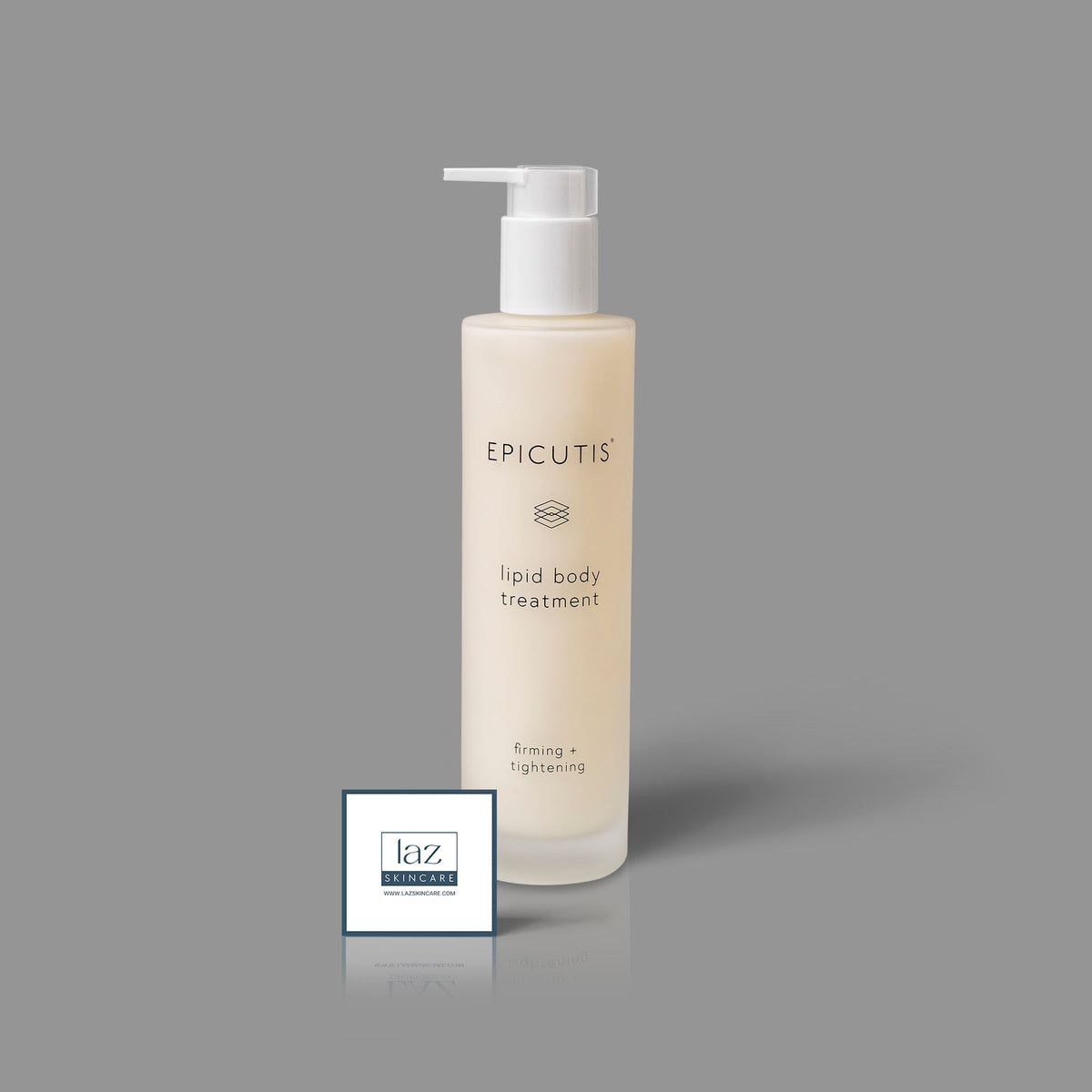
The Epicutis Lipid Body Treatment, stocked by LAZ Skincare.
For crepiness rather than laxity. Those are different problems.

The short answer

The Epicutis Lipid Body Treatment is what I use for crepiness rather than for laxity. Spilanthes and lychee seed extract on smoothness and elasticity, caffeine and glucosyl hesperidin on circulation, and ceramide AP underneath rebuilding the barrier that holds it all taut.

Daily on damp skin, worked upward. A little goes a long way.

It improves the quality of the skin. It does not lift tissue that has descended, and on the body that ceiling is lower than on the face because there is more surface area and less blood supply. Twelve weeks before you judge it.

Why does the skin on my arms and legs look crepey?

Two different things get called loose skin, and only one of them responds to anything you can buy.

  • Crepiness. Finely lined, papery skin that looks worse when dry and better when hydrated. This is surface and dermal quality, and it improves with treatment.
  • Laxity. Skin that hangs and does not spring back when you release it. This is structural, and nothing topical reaches it.

A rough test. Pinch the skin gently and let go. If it snaps back and the concern is the fine lines you can see while pinching, that is crepiness. If it settles slowly or stays folded, you are looking at laxity.

What drives both on the body: declining collagen and elastin production, years of UV on areas that rarely get sunscreen, dryness, friction from clothing and workouts, and significant weight change in either direction.

Body skin also regenerates more slowly than facial skin, which is why the same decline shows up later and then improves more slowly too.

The Epicutis Lipid Body Treatment from the LAZ Skincare range.
Upward strokes on arms, thighs and abdomen, on damp skin.

Which ingredients help firm body skin?

Ones that work on elasticity, circulation and hydration together, because on the body all three contribute and most lotions address only the third. The Epicutis Lipid Body Treatment is built across all of them.

Spilanthes acmella flower extract contains spilanthol and is the ingredient aimed most directly at this concern. It supports the appearance of firmness and softens the look of fine lines, and it is where the improvement in crepey upper arms and chest comes from.

Lychee seed extract works against glycation, the process where sugar binds to collagen and elastin and leaves them stiff and brittle. Glycated protein holds its shape badly, which is a genuine and rarely addressed contributor to crepiness.

Caffeine and glucosyl hesperidin support microcirculation. Better blood supply means more of what fibroblasts need to build with, and on limbs where circulation is naturally poorer that matters more than it does on a face.

Ceramide AP and dihydroxylignoceroyl phytosphingosine rebuild the lipid barrier. Skin that cannot hold water cannot look taut, so this is doing firmness work despite sounding like hydration work.

Hyvia and hydroxyethyl urea handle inflammation and water retention, with urea softening the thickened areas that make crepiness look worse than it is.

Fragrance-free, which on a product going onto large areas daily is worth more than any single active.

How long does body firmness take to improve?

Smoother texture and better bounce within a few weeks, most of which is hydration and is real but shallow. Genuine change in crepiness runs across two to three months, and it is modest.

What I notice in clients using it consistently is improved bounce and less visible creping in high-movement areas, knees and elbows especially. I want to be accurate though. In clinic this sits alongside microneedling, radiofrequency and targeted massage, and those are doing the structural work while this maintains the result between sessions.

If you are treating crepiness with homecare alone, expect improvement rather than correction.

Who it does not suit: anyone with genuine laxity expecting tightening, which needs devices or surgery. Anyone wanting a fast result, since the body is slower than the face. And anyone who will not use sunscreen on the areas concerned, because UV degrades the proteins faster than this rebuilds them.

Epicutis Lipid Body Treatment, part of the LAZ Skincare range.
Pinch and release. Snaps back is crepiness. Stays folded is laxity.

What to do

  1. Do the pinch test first so you know whether you are treating crepiness or laxity. It decides whether any of this is worth your money.
  2. Apply the Epicutis Lipid Body Treatment daily to damp skin after showering, using upward strokes on arms, thighs and abdomen.
  3. Include the neck and chest. They thin and crepe earlier than limbs and get treated last.
  4. Sunscreen on anything uncovered outdoors. This is the step that protects whatever you build.
  5. A gentle body exfoliant once or twice a week, but only once the skin is not flaking. Never on a compromised barrier.

If firmness is genuinely the goal, this belongs alongside in-clinic treatment rather than in place of it. I would rather say that now than have you disappointed in March.

Bounce and smoothness in weeks. Crepiness at two to three months, modestly. Judge it by how the skin feels under your hand as much as by what a photograph shows.

Sources and further reading

Product discussed: Epicutis Lipid Body Treatment. Stocked because it is used in the clinic. The full ingredient list and current details are on the product page.

Crepiness and laxity look similar and only one of them responds to homecare, which makes this a useful thing to have assessed before you spend. Book a consultation, in person at the NYC clinic or virtually, and I will tell you which you have.

Last reviewed