Instructional7 min read

Most of the disappointing microneedling results I see were not bad microneedling. They were a good treatment followed by seven days of whatever happened to be in the bathroom cabinet.

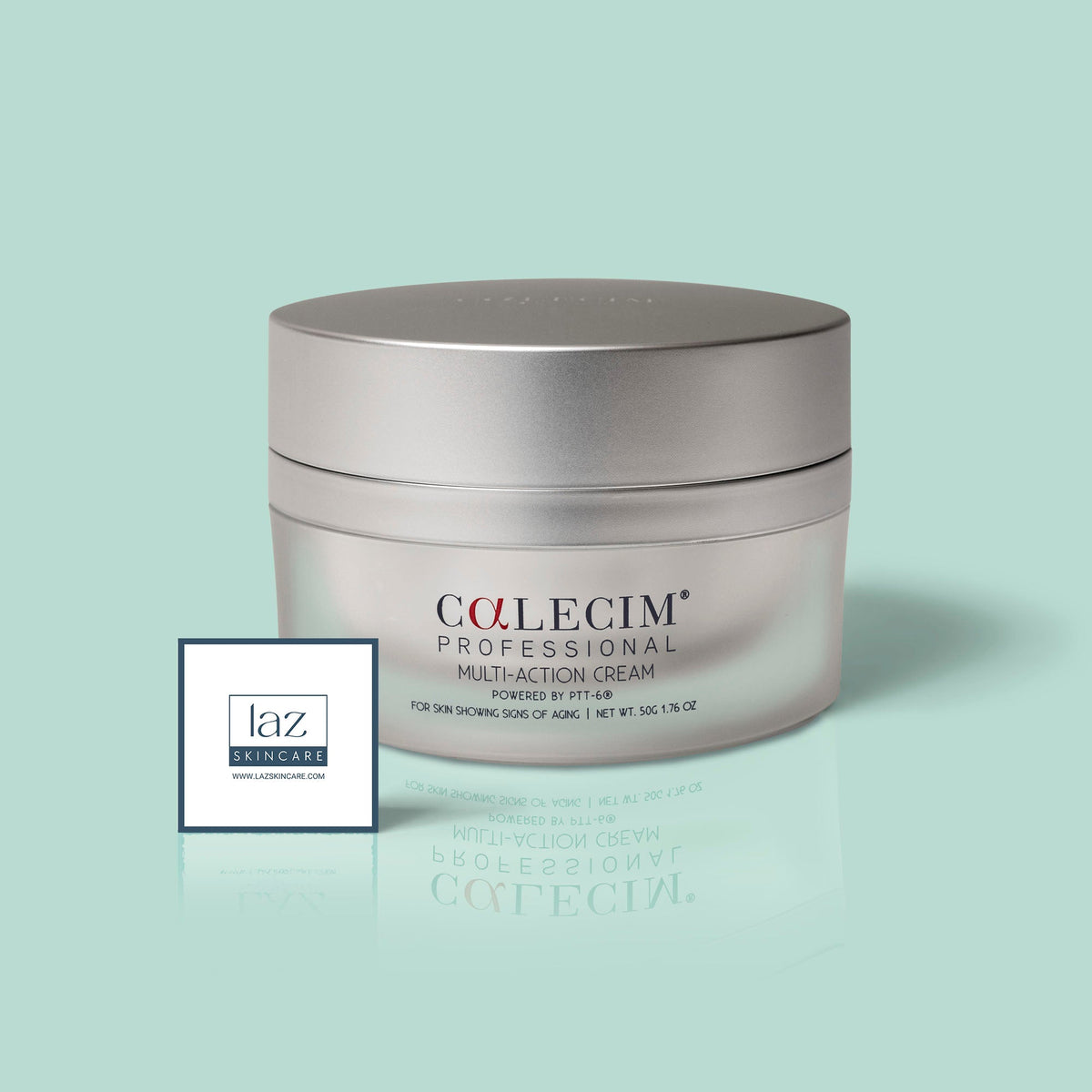
The Calecim Multi-Action Cream, stocked by LAZ Skincare.
What I hand clients for the seven days after a treatment.

The short answer

The Calecim Multi-Action Cream is what I hand clients for the week after a treatment. Conditioned media and structural proteins for the repair itself, and a fatty acid base that rebuilds the barrier the procedure deliberately opened.

Twice daily for the first five to seven days.

One rule overrides everything below. Your practitioner's aftercare instructions win. Protocols differ by device, by depth and by skin, and a cream cannot rescue a treatment that was too aggressive for you in the first place. If what you were given conflicts with this article, follow them and not me.

What happens to your skin after microneedling?

It runs a controlled wound-healing response, and that response is the entire point. The needling itself does not rejuvenate anything. The repair it provokes does, which is why the days afterward carry more of your result than the settings did.

For a few days the barrier is genuinely open. Water leaves faster, irritants get in more easily, and the skin is inflamed by design.

What goes wrong in that window:

  • Inflammation that drags on longer than it should, which is where post-procedure pigment comes from.
  • Dryness and flaking, from water escaping through a barrier that has not closed.
  • Actives applied too early. Acids, retinoids and vitamin C on open skin cause the irritation you are trying to avoid.
  • Sun exposure on skin with almost no defenses, which is the fastest way to turn a treatment into a pigment problem.

Everything on that list is avoidable, and every one of them is common.

The Calecim Multi-Action Cream from the LAZ Skincare range.
Twice daily for five to seven days. Gentle cleanser and this, nothing else.

What should you put on skin after microneedling?

Lipids to close the barrier, proteins the skin can use while rebuilding, and hydration. Nothing that exfoliates, nothing that stings, nothing with fragrance. The Calecim Multi-Action Cream is a short formula that meets those conditions, which is most of why I use it here.

Oleic, linoleic and palmitic acids make up much of the base and they are doing the most urgent job. A treated barrier loses water fast, and replacing the lipids it is built from is what stops the tightness and the flaking.

PTT-6 is the conditioned media fraction, carrying growth factors and signaling proteins into skin that is mid-repair. This is the one window where a growth factor product has an obvious route in, and it is the reason clinics reach for this category at all.

Soluble collagens, glycoproteins and fibronectins give structural material during rebuilding. Fibronectin is involved in how cells organize themselves in a healing wound, which is exactly the process underway.

Hyaluronic acid, lactic acid and potassium lactate hold water. The lactic acid sits at the end of the list as a humectant and pH element rather than an exfoliant, which is what makes the formula appropriate here.

Tocopherol covers oxidative stress while the skin has little defense of its own.

Nineteen ingredients, no fragrance, no essential oils and no exfoliant. On day one that list of absences is worth more than anything present.

How long does microneedling recovery take?

Redness and heat settle over two to three days. Flaking, if it happens, arrives around day three and clears by the end of the first week. The collagen work underneath runs for weeks afterward, long after you look normal again.

One client came in for a microneedling series targeting early laxity and dullness. After the first session we used this nightly for seven days and nothing else. Her skin looked noticeably calmer by day two, and by week two she had a healthy glow and softer texture, without the flaking or tightness that usually follows.

The absence of flaking is the part I would draw your attention to. That is the barrier closing on schedule.

Who it does not suit: anyone whose practitioner has specified a different aftercare product, which happens often and for good reasons. Oily or congested skin, which may find it heavy for daily use once healing is done. And anyone hoping good aftercare will compensate for a treatment that was too aggressive, because it will not.

Calecim Multi-Action Cream, part of the LAZ Skincare range.
The one window where a growth factor product has an obvious route in.

What to do

  1. Stop retinoids and acids several days before your treatment. Going in with irritated skin makes everything afterward worse.
  2. Straight after treatment, once your practitioner has cleared you, apply the Calecim Multi-Action Cream to clean skin.
  3. Twice daily for the first five to seven days, or longer if you are healing slowly. Gentle cleanser and this. Nothing else.
  4. Under sunscreen every morning, and stay out of direct sun for at least two weeks. This is the step that protects the result.
  5. Bring actives back one at a time once the skin is fully calm, usually around a week to ten days, and not sooner because you are impatient.

No hot showers, saunas, steam or intense exercise for the first couple of days. Heat prolongs the inflammation you are trying to shorten.

Calmer within two days. Comfortable by the end of the first week. The result you booked the treatment for arrives over the following month or two, quietly, while you are not looking at it.

Sources and further reading

Product discussed: Calecim Multi-Action Cream. Stocked because it is used in the clinic. The full ingredient list and current details are on the product page.

Aftercare is easier to get right when it is planned before the treatment rather than improvised the evening after it. Book a consultation, in person at the NYC clinic or virtually, and we will set the whole window up in advance.

Last reviewed