Account7 min read

Redness now is pigment later. Every flare you leave running is depositing something you will spend six months trying to fade, which is why treating them as two separate problems costs people so much time.

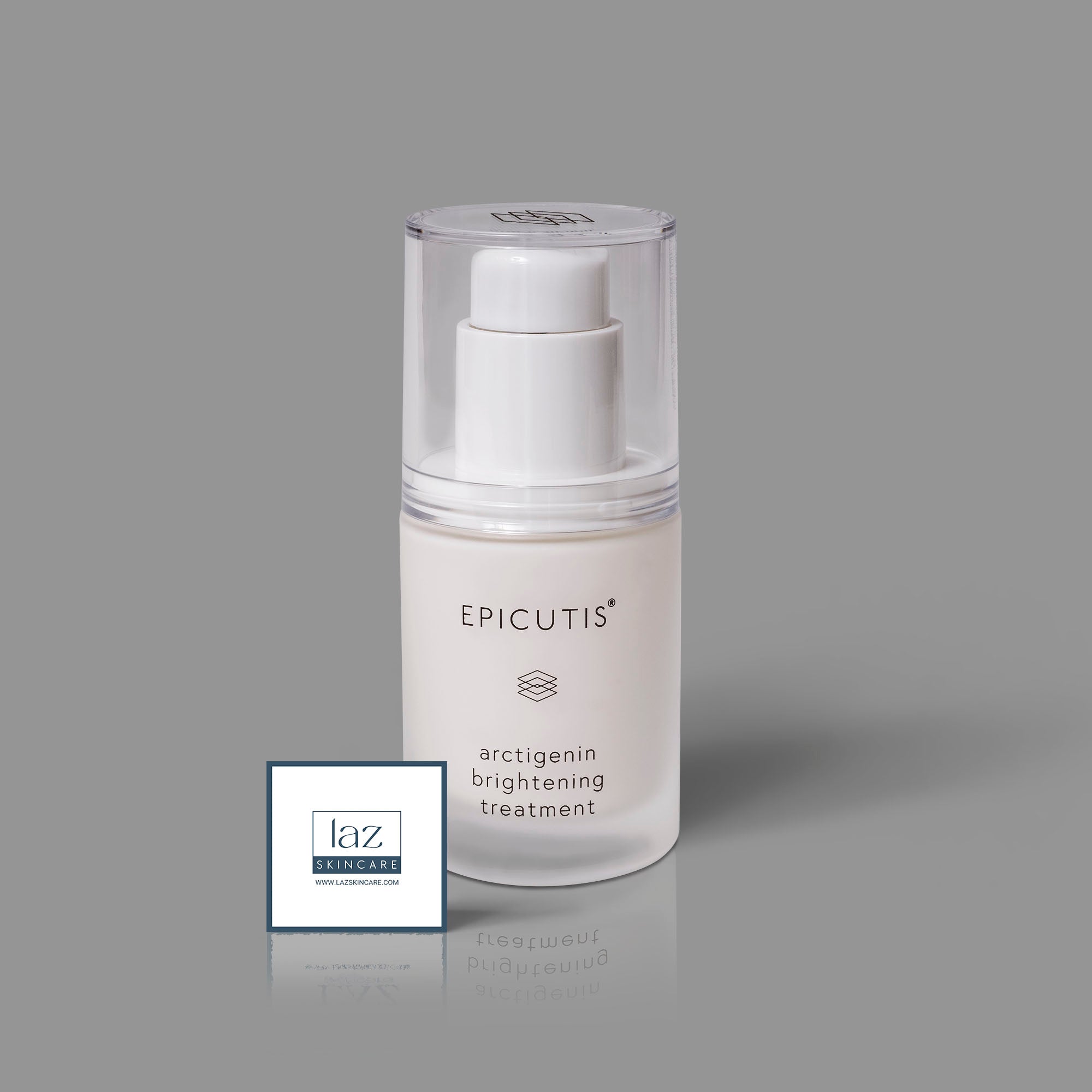
The Epicutis Arctigenin Brightening Treatment, stocked by LAZ Skincare.
For when redness and pigment arrive together, because they share a cause.

The short answer

The Epicutis Arctigenin Brightening Treatment is what I reach for when redness and pigment arrive together, because it treats the thing underneath both. Arctigenin on the inflammatory signalling, Hyvia on the water loss keeping it going, and an antioxidant complex on the oxidative stress feeding it.

One or two pumps on cleansed skin, morning or night, layered straight under everything else.

It does not touch visible broken capillaries and it is not a rosacea treatment. What it does is settle the inflammation that keeps generating both the redness and the marks, which is slower than covering either and considerably more durable.

Why do redness and dark marks show up together?

Because they are the same process caught at different points. Inflammation dilates vessels, which you see as redness. That same inflammation stimulates pigment cells, and what they deposit shows up weeks later as a mark. One event, two visible outcomes on different clocks.

Which means the things causing your redness are also writing your pigment for next season.

The triggers I see behind both:

  • Harsh cleansers, and overuse of glycolic or salicylic acid.
  • A vitamin C serum at a strength the skin cannot handle, which is more common than people expect.
  • Skipping moisturizer after treatments, when the barrier is least able to hold itself together.
  • Heat, from showers, workouts and sun rather than only from UV.
  • Travel and abrupt changes in climate.

Persistent redness is not a cosmetic complaint. It is the skin telling you inflammation is running, and if you treat it as a colour problem you will keep collecting marks while you work on the colour.

The Epicutis Arctigenin Brightening Treatment from the LAZ Skincare range.
Pressed in with the palms. Friction on inflamed skin undoes the work.

What calms inflammation without irritating reactive skin?

Ingredients that work below the surface rather than on it, in a formula with nothing abrasive to complicate matters. The Epicutis Arctigenin Brightening Treatment runs on three of them.

Hyvia, a biotech chia seed oil is the one I would highlight for redness specifically. It reduces water loss through the skin, which is the mechanism keeping inflamed skin inflamed. Repair the lipid barrier and the flares stop restarting themselves.

Arctigenin, from burdock seed oil interrupts the loop where inflammation produces pigment and pigment-prone skin produces more inflammation. It is why one product covers both complaints rather than one of them.

DSD, an antioxidant-lipid complex handles oxidative stress from UV, pollution and internal stress, all of which sustain chronic redness quietly in the background.

Squalane, pine bark extract, tocopherol and ferulic acid provide lipids and antioxidant cover. The ferulic acid is an antioxidant rather than an exfoliant, which matters on skin that has learned to fear the word acid.

Nothing exfoliating, nothing fragranced, no retinoid and no ascorbic acid. On reactive skin that list of absences is why it can be used daily.

How long does inflamed, marked skin take to settle?

Redness and comfort shift within a week or two. The marks follow over months, because pigment always clears slower than the inflammation that produced it.

Three cases stay with me. A bride-to-be with rosacea flaring across her cheeks and chin. A client with post-inflammatory erythema from picking at acne. And someone healing from a TCA peel whose skin would not tolerate most topicals at all. In each case the redness settled faster than I expected, the texture improved, and makeup sat properly again within a week or two.

The peel client is the one that tells you most. Skin that rejects everything usually accepts this.

Who it does not suit: anyone with visible thread veins expecting them to fade, since those need laser. Anyone with diagnosed rosacea hoping to replace a prescription. And anyone unwilling to remove the acids and harsh cleansers causing the problem, because this cannot outpace them.

Epicutis Arctigenin Brightening Treatment, part of the LAZ Skincare range.
Redness now is pigment later. One process, two clocks.

What to do

  1. Take out the acids, scrubs and any vitamin C that has been stinging. That step is doing half the work.
  2. Morning: cleanse, then one to two pumps of the Epicutis Arctigenin Brightening Treatment, then moisturizer and sunscreen.
  3. Evening: cleanse, press the serum in with your palms rather than rubbing, then a barrier-repair cream.
  4. If your skin is very reactive, cut back to three products total while it settles. A gentle cleanser, this, and a calming cream.
  5. Reintroduce anything active one at a time, no sooner than a fortnight apart, once you have had a calm week.

After microneedling, a peel or laser, this is usable once your practitioner has cleared you, and it is one of the few things I will put on skin at that stage.

Comfort within days. Visible redness down at one to two weeks. Marks across months. If new flares stop leaving marks as dark as the old ones, the plan is working even while the old marks are still there.

Sources and further reading

Product discussed: Epicutis Arctigenin Brightening Treatment. Stocked because it is used in the clinic. The full ingredient list and current details are on the product page.

Redness with pigment needs the shared cause identified rather than the two symptoms chased separately. Book a consultation, in person at the NYC clinic or virtually, and we will work out what is driving both.

Last reviewed