Instructional7 min read

People with red skin are told to avoid actives, so they end up with a routine of nothing much and a face that stays red. There is a middle position, and azelaic acid is most of it.

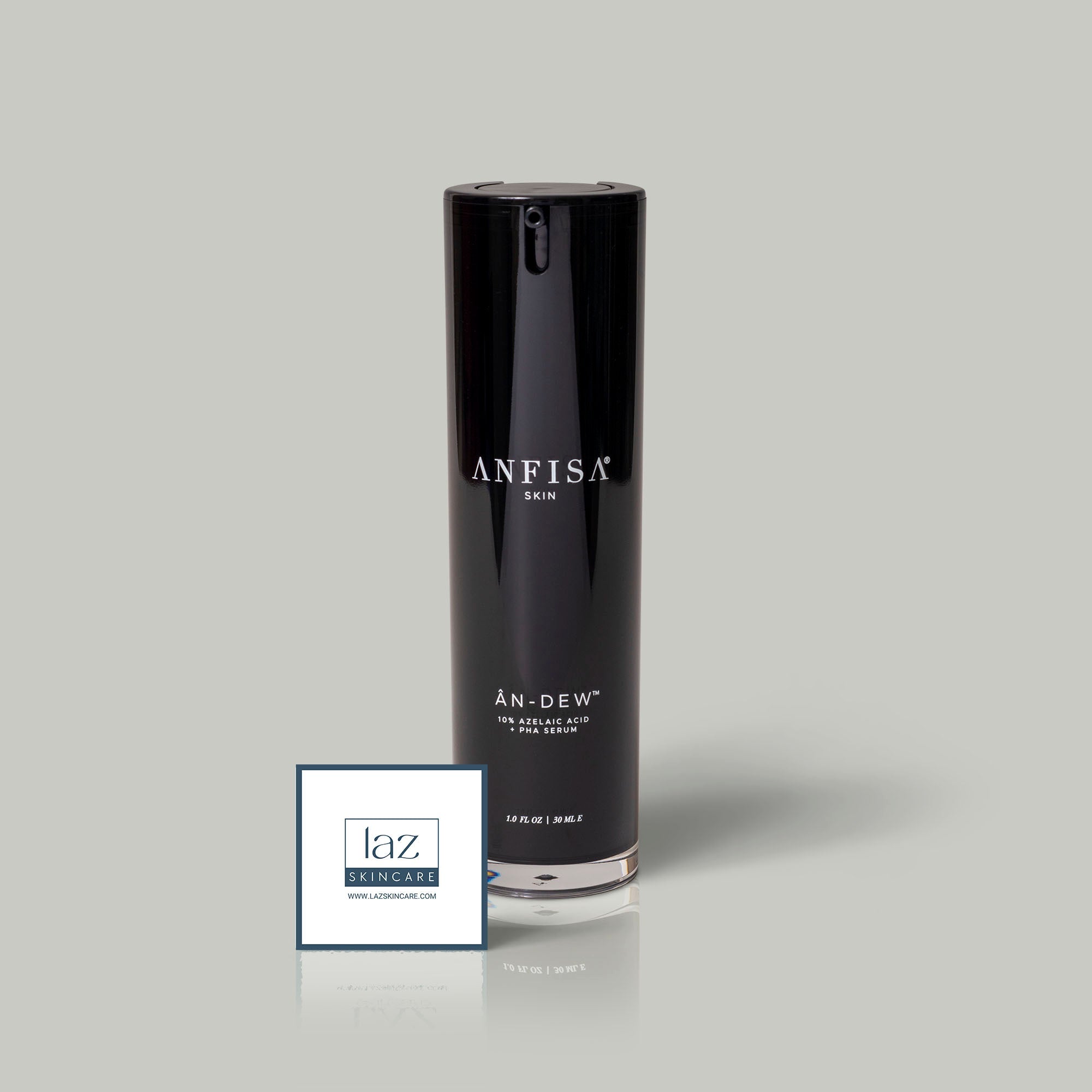
The Anfisa ÂN-DEW, stocked by LAZ Skincare.
An active for people who have been told to avoid actives.

The short answer

The Anfisa ÂN-DEW is the serum I use when someone needs an active but their skin cannot take a normal one. Azelaic acid is anti-inflammatory before it is anything else, and licorice root, green tea and fermented resveratrol sit behind it doing the same work from other directions.

Once daily at night to start. Twice only when the skin has proved it can.

It works on inflammatory redness. It does nothing whatsoever for visible broken capillaries. If you can see individual vessels, no serum is going to remove them, and anyone selling you one for that is taking your money. Those need light or laser treatment.

Why does my face stay red all the time?

Because the inflammation never fully resolves between flares, so the skin sits in a low-grade activated state rather than returning to baseline. Redness that comes and goes is a response. Redness that stays is a response that has become the default.

The versions I see most often:

  • Post-breakout. Inflammation from acne leaves the area red long after the spot has gone.
  • Post-treatment. Lasers, peels and needling leave redness that should fade, and sometimes lingers longer than anyone expected.
  • Seasonal. Transitional weather is the reliable trigger, more so than deep winter, because the skin never settles into one set of conditions.
  • Self-inflicted. Too many actives, too much exfoliation, and a barrier that has not been closed in months.

The trap is that all four discourage people from using anything at all, and doing nothing does not resolve inflammation. It just stops adding to it.

The Anfisa ÂN-DEW from the LAZ Skincare range.
Once daily at night first. Twice only once the skin has proved it can.

Does azelaic acid help redness?

It does, and it is one of the few actives that reduces redness rather than causing it. That is unusual enough to be the whole reason this serum works on skin that rejects everything else. The Anfisa ÂN-DEW stacks four calming ingredients behind it.

Azelaic acid is anti-inflammatory in its own right, which is why it turns up in rosacea protocols. It also balances pigment, so the discolouration sitting under the redness gets treated at the same time instead of waiting its turn.

Licorice root extract is one of the gentlest genuinely effective soothing agents available. It reduces inflammation and helps fade the redness left behind after it. In calming protocols it is usually the first botanical I add.

Green tea extract lowers the skin's reactivity to environmental stress, which matters for redness driven by heat, pollution or weather rather than by anything you applied.

Fermented resveratrol carries strong antioxidant activity and is the ingredient I lean on for skin recovering from a procedure or a sun exposure it did not plan for.

Gluconolactone refines texture without inflaming, which on red skin is the only kind of exfoliation worth attempting.

Four anti-inflammatories and one very slow acid. That ratio is the design.

Can I use an active serum on skin that is already red?

Yes, if the active is anti-inflammatory and you introduce it slowly. The instinct to use nothing is understandable and it keeps people stuck, because avoiding irritation is not the same as treating inflammation.

One client arrived after a laser treatment with redness that had not settled and real discomfort, plus dark marks from old breakouts underneath it. She was understandably nervous about putting anything active on her face. We introduced this as a single daily support step and changed nothing else. Two weeks later the redness had calmed substantially and her tone had started to even out.

The brightening was not what fixed her. The anti-inflammatory work happening alongside it was.

Who it does not suit: anyone with visible telangiectasia expecting them to disappear, anyone whose skin is currently broken or weeping, and anyone who has reacted to azelaic acid before. If you flush violently and predictably to triggers, get assessed for rosacea first so you know what you are managing.

Anfisa ÂN-DEW, part of the LAZ Skincare range.
Four anti-inflammatories and one very slow acid. That ratio is the design.
What to do

  1. Clear the decks. This becomes your only treatment step while the skin finds its balance.
  2. One or two pumps of the Anfisa ÂN-DEW on clean, dry skin, once daily at night if you are highly reactive.
  3. Follow with a calming moisturiser carrying ceramides or squalane. Do not skip this on red skin.
  4. Sunscreen every morning. Heat and UV both intensify redness, and one of them works through glass.
  5. Build to twice daily only after two weeks without stinging. There is no prize for getting there early.

After a professional treatment, wait until your practitioner clears you before restarting.

Visible calming at two weeks. Tone and texture at six to eight. Background redness that has been there for years takes longer, and the honest measure of progress is how quickly your face settles after a flare rather than whether flares stop.

Sources and further reading

Product discussed: Anfisa ÂN-DEW. Stocked because it is used in the clinic. The full ingredient list and current details are on the product page.

Inflammatory redness, vascular redness and a damaged barrier can look identical and need entirely different plans, and only one of the three responds to a serum. Book a consultation, in person at the NYC clinic or virtually, and we will work out which you are dealing with.

Last reviewed