Timeline7 min read

You cannot dry inflamed acne out of existence. The people who try hardest are the ones who arrive at my clinic with the worst barriers and the most stubborn breakouts, and the first thing we do is take products away.

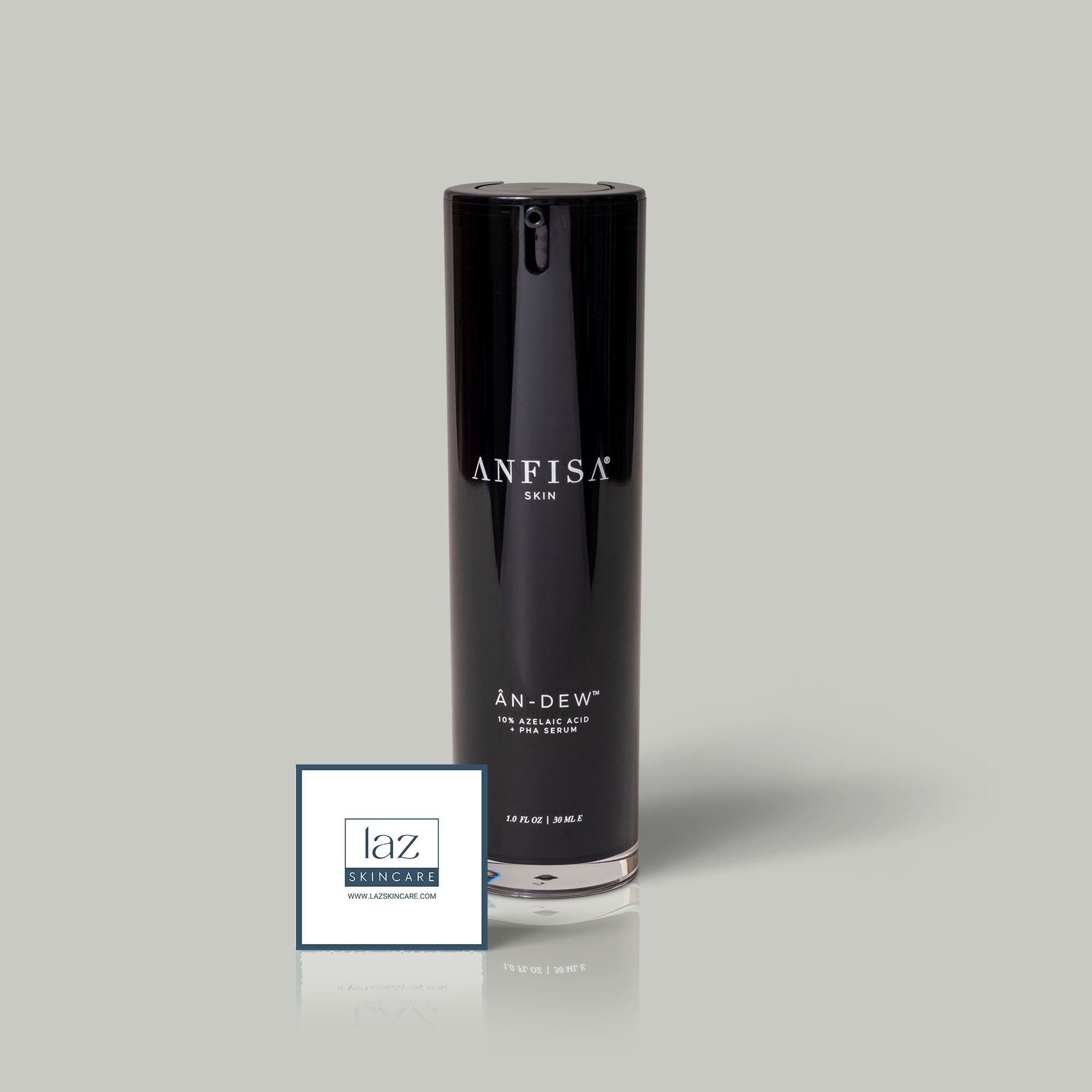
The Anfisa ÂN-DEW, stocked by LAZ Skincare.
The step that gets inflamed skin calm enough to actually treat.

The short answer

The Anfisa ÂN-DEW is what I use to get inflamed skin calm enough to treat. Azelaic acid for the inflammation and the bacteria, gluconolactone for exfoliation slow enough that angry skin accepts it, and hexylresorcinol working on the marks before they set.

Once daily to begin with, morning or night, on clean dry skin.

It is not a spot treatment and it will not clear moderate to severe acne on its own. What it does is hold the ground steady so that the things which do clear acne become usable. If your acne is cystic or scarring, you need a dermatologist, and this is a support act rather than the plan.

Why does inflamed acne get worse when I dry it out?

Because inflammation is the engine, and stripping the skin adds fuel to it. Most acne products go after oil or bacteria. Neither is what makes a breakout red, swollen and painful, and neither addresses what is happening underneath it.

The sequence I see over and over:

  • A breakout appears, so cleansing gets more frequent and more aggressive.
  • The barrier thins. Skin loses water, gets tight, and produces more oil to compensate.
  • A compromised barrier is a more inflamed barrier, so the spots take longer to resolve and hurt more while they do.
  • Each one leaves a darker mark, because the deeper the inflammation ran, the more pigment gets left behind.
  • Something stronger goes on top, and the loop tightens.

If your acne routine leaves your face tight, it is not working. It is just loud.

Calming first is not the soft option. It is the step that makes everything afterwards possible.

The Anfisa ÂN-DEW from the LAZ Skincare range.
Once daily to start. Twice only after a fortnight without stinging.

What is in it, and does azelaic acid help inflamed acne?

Azelaic acid is one of the few ingredients that works on inflamed acne from several directions at once, which is exactly what this kind of breakout needs. The Anfisa ÂN-DEW is built around it.

Azelaic acid is anti-inflammatory, antibacterial and brightening in one molecule. It brings redness down, works against the bacteria involved in acne, and interrupts the pigment that a healing breakout would otherwise leave behind. It is also unusually well tolerated by skin that reacts to everything else.

Gluconolactone is a polyhydroxy acid. Its molecule is larger than an AHA, so it penetrates more slowly and exfoliates more gently, and it hydrates while it does so. On inflamed skin that difference decides whether exfoliation helps or sets you back.

Hexylresorcinol acts on tyrosinase, the enzyme that drives melanin production. Its work here is preventative. It is aimed at the mark the spot has not finished making yet.

Supporting those: licorice root and kakadu plum for soothing and antioxidant cover, jojoba and raspberry seed oil for barrier lipids that will not congest, then mulberry leaf, amla, ferulic acid and green tea.

Notice that the exfoliant and the anti-inflammatory are in the same bottle. That combination is the reason it works on skin too irritated for a separate acid.

How long does it take to calm inflamed acne?

Roughly two weeks to take the heat out, then a month or more of steady work before you judge whether the acne itself is improving. Those are two different clocks and people routinely confuse them.

One client came in with red, inflamed breakouts around the mouth and lower cheeks, a mix of hormonal pattern acne and a history of harsh exfoliants. We removed every stripping product and cut her back to three steps: a barrier-supporting cleanser, this serum, and a targeted sulfur treatment. Inside two weeks the redness had faded, the active breakouts had settled, and her skin no longer felt tight.

That calm phase was not the result. It was what let us move into the active phase of her treatment at all.

Who it does not suit: anyone with cystic or nodular acne, or scarring, who needs prescription treatment rather than a serum. Anyone whose skin has reacted to azelaic acid before. It also suits oily skin better than people expect, since balancing oil starts with hydration and this will not congest.

Anfisa ÂN-DEW, part of the LAZ Skincare range.
Exfoliant and anti-inflammatory in one bottle. That is the whole trick.

What to do

  1. Weeks one and two, the calm phase. Strip the routine back to a gentle cleanser, this serum, and a moisturiser. Every scrub, acid and drying spot treatment comes out.
  2. Apply the Anfisa ÂN-DEW in circular motions to a clean, dry face once daily. Include the neck and chest if you break out there.
  3. Move to twice daily only once a fortnight has passed without stinging. Not sooner because you want faster results.
  4. Weeks three onward, the active phase. Reintroduce one treatment at a time, a fortnight apart, so you can see what each one does.
  5. Sunscreen every morning. Azelaic acid is working on pigment, and UV is working against it.

A mild tingle in the first week is normal. Burning, spreading redness or new flaking is not, and means drop to every other day.

Redness and comfort at two weeks. Fewer new breakouts by six to eight. The marks left behind fade slowest of all, and they will keep fading for months after the acne itself has gone quiet.

Sources and further reading

Product discussed: Anfisa ÂN-DEW. Stocked because it is used in the clinic. The full ingredient list and current details are on the product page.

Inflamed acne, hormonal acne and irritation from over-treatment look similar and need different plans, and the wrong guess costs you months of marks. Book a consultation, in person at the NYC clinic or virtually, and we will build the sequence around your skin.

Last reviewed