Diagnostic7 min read

Natural is not a synonym for gentle. Some of the most reliable sensitizers I deal with are essential oils, and they are almost always sitting in the products marketed as the kind ones.

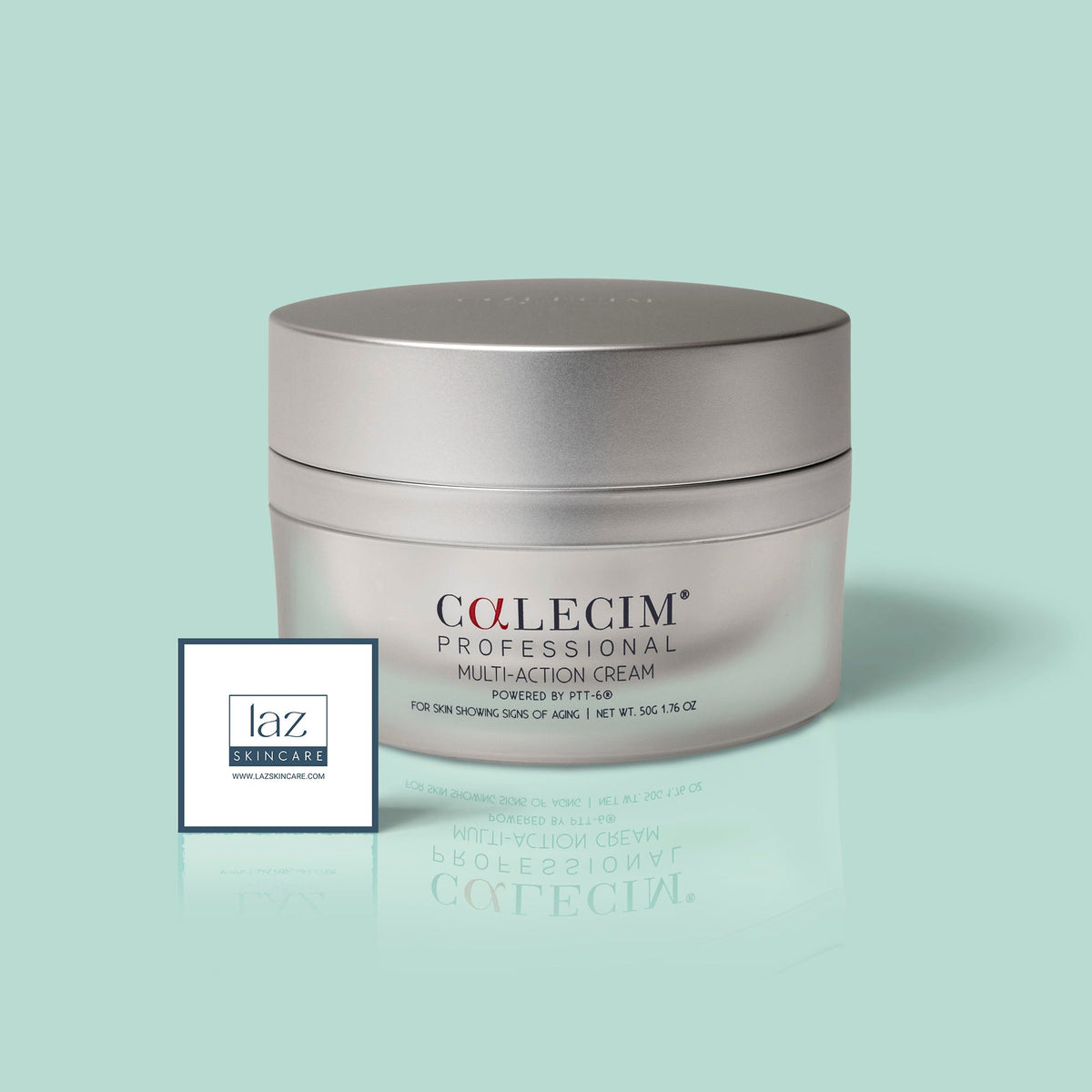
The Calecim Multi-Action Cream, stocked by LAZ Skincare.
No fragrance, no essential oils, no botanicals. That is the whole point.

The short answer

The Calecim Multi-Action Cream is what I use for reactive skin that needs rebuilding rather than soothing. Nineteen ingredients, no fragrance, no essential oils, no botanical extracts, and a fatty acid base that closes a barrier rather than coating it.

Once or twice daily, as your only hydration step until things settle.

But do the diagnosis first. If you have a genuine allergy to something you are still using, this cream will not save you from it and no amount of barrier repair will. Working out which of the three things below is happening matters more than which moisturizer you buy.

Is my skin allergic to a product or just irritated?

They feel similar and they behave differently, and the timing usually gives it away. There are three separate things that get called sensitive skin.

  • Irritation. Immediate. It stings or burns while you are applying it, stays where you put it, and settles once you stop. It is dose-dependent, which means anyone would react at a high enough concentration. This is not an allergy and it does not get worse over time.
  • Allergic contact dermatitis. Delayed, usually twelve to seventy-two hours later. Itchy rather than stinging, often bumpy, and it can spread past where you applied it. It gets worse with each exposure rather than better, and identifying the culprit properly needs patch testing from a dermatologist.
  • A compromised barrier. Everything stings and you cannot name a single culprit, because there is not one. This follows over-exfoliation, over-treatment or a hard winter, and it is the most common of the three by a wide margin.

The reason it matters: a damaged barrier gets better when you simplify and rebuild. An allergy gets worse until you identify the ingredient and remove it, no matter how gentle everything else becomes.

If your reactions arrive the next day and itch, stop reading skincare articles and get patch tested.

The Calecim Multi-Action Cream from the LAZ Skincare range.
Your only hydration step, held unchanged for a month.

What should reactive skin use instead?

Short ingredient lists, barrier lipids and nothing aromatic. The fewer components in a formula, the fewer opportunities there are for one of them to be your problem. The Calecim Multi-Action Cream is unusually short for a cream of its kind.

Oleic, linoleic and palmitic acids form most of the base and do the structural repair. Reactive skin loses water through a barrier that is not sealed, and lipids are what seal it. This is the part that stops the tight, raw feeling.

PTT-6 is the conditioned media fraction. For reactive skin its useful property is helping regulate the inflammatory response rather than suppressing the appearance of it, which is a slower and more durable route.

Glycoproteins, soluble collagens and fibronectins give the skin scaffolding while it rebuilds resilience. Thin fragile skin reacts to things that robust skin ignores entirely.

Hyaluronic acid, potassium lactate and lactic acid hold water. To be clear about one thing, the lactic acid sits at the very end of the list and is working as a humectant and pH element here. There is no exfoliation happening, which is exactly what you want.

Now the part that catches people. Fragrance, essential oils and botanical extracts are among the most common causes of contact allergy in skincare, and they turn up constantly in products sold as natural, clean or soothing. A short synthetic formula is frequently the gentler choice, and that runs against everything the marketing has told you.

How long does reactive skin take to calm down?

Two to four weeks for a barrier problem, provided the routine stays still. An allergy improves within days of removing the ingredient and not before, which is another reason the diagnosis comes first.

One client arrived red, irritated and tight after switching to clean products that turned out to be considerably harsher than what she had left behind. We removed every active, rebuilt around a gentle cleanser, sunscreen and this cream, and changed nothing for three weeks. By the end of it her skin was calmer, better hydrated and no longer reacting to touch or temperature.

She had not been using too few good products. She had been using too many fragrant ones.

Who it does not suit: oily or congested skin, which will find the texture heavy. Anyone with an undiagnosed contact allergy, who needs patch testing rather than a new cream. And anyone with diagnosed eczema or rosacea expecting this to replace prescription treatment.

Calecim Multi-Action Cream, part of the LAZ Skincare range.
A short synthetic formula is often the gentler choice. Marketing says otherwise.

What to do

  1. Work out which of the three you have. Note whether reactions are immediate and stinging or delayed and itchy, and write it down rather than trusting your memory of it.
  2. Strip back to a non-foaming cleanser, this cream, and sunscreen. Nothing else, including the products you think are innocent.
  3. Apply the Calecim Multi-Action Cream to clean, dry skin once or twice daily as your only hydration step.
  4. Hold that unchanged for a month. Every substitution resets the clock and destroys the information you are gathering.
  5. Reintroduce one product at a time, on the jaw for three nights before it goes on your face.

Keep the empty packaging of anything that caused a bad reaction. If you end up being patch tested, that ingredient list is genuinely useful evidence.

Comfort in days. Less redness and fewer flares at two to four weeks. Real tolerance takes a few months, and it is measured by what you can add back rather than by how your skin looks at rest.

Sources and further reading

Product discussed: Calecim Multi-Action Cream. Stocked because it is used in the clinic. The full ingredient list and current details are on the product page.

Separating a damaged barrier from a genuine allergy is difficult from inside it, and the two need opposite approaches. Book a consultation, in person at the NYC clinic or virtually, and we will go through your reaction history properly.

Last reviewed