Deep Dive7 min read

My skin looks worse in the morning than it did the night before. If that is you, the night is not neutral time. It is when the inflammation runs, and most routines treat bedtime as the moment to stop paying attention.

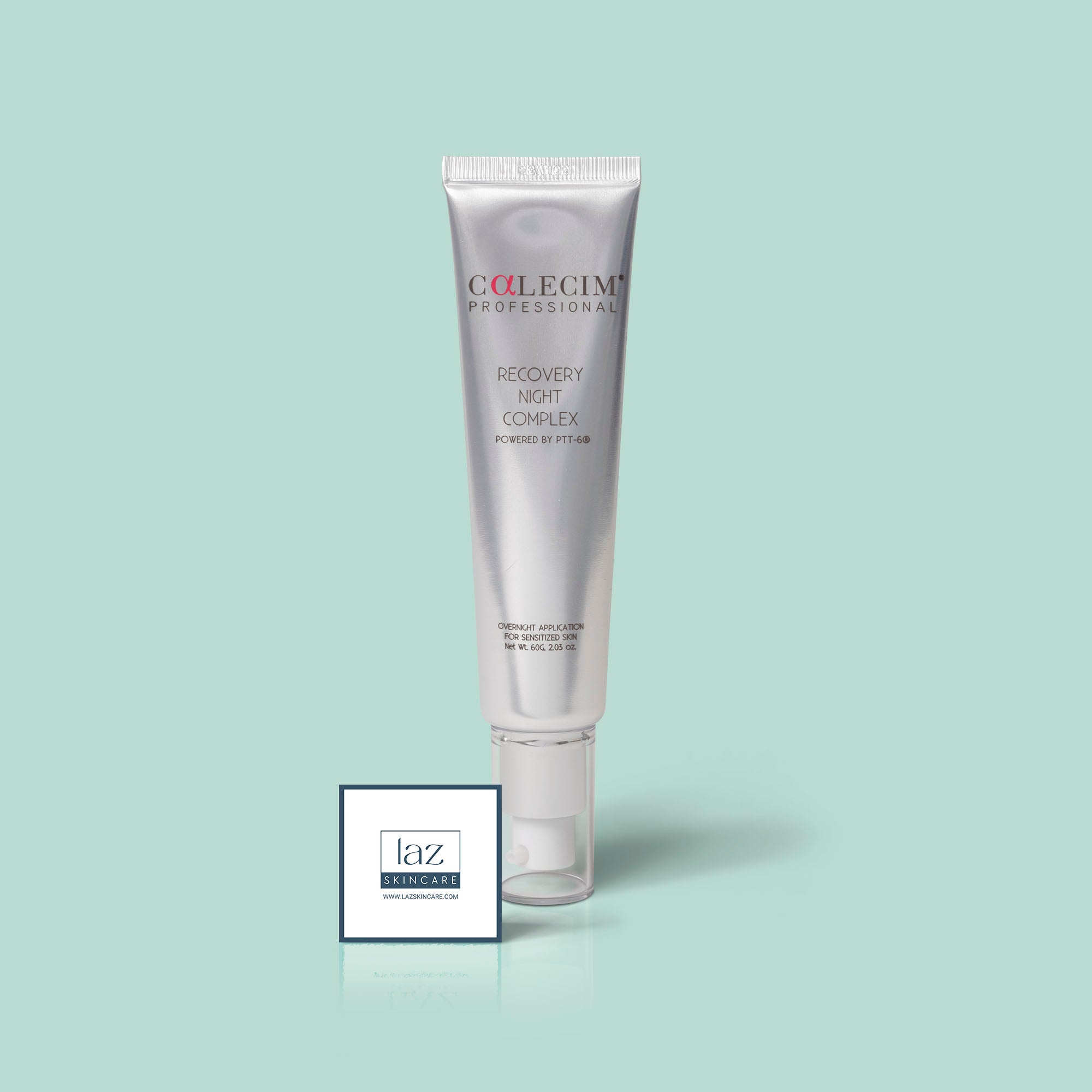
The Calecim Recovery Night Complex, stocked by LAZ Skincare.
For redness that is worst at dawn rather than constant through the day.

The short answer

The Calecim Recovery Night Complex is what I use when the redness is worst overnight. Niacinamide, cucumber and allantoin to calm, two weights of hyaluronic acid against the water loss that peaks while you sleep, and PTT-6 working with the skin's own repair cycle rather than against it.

Five pumps across the face and neck at night, rinsed off in the morning.

Note the rinsing. This is an overnight gel mask rather than a night cream, and it is meant to come off when you wake. It will not treat vascular redness or replace prescription rosacea treatment, and if your skin is red all day rather than at dawn, this is aimed at the wrong window.

Why is my face red in the morning?

Because skin behaves differently at night, and almost every one of those differences works against redness-prone skin. Overnight is when repair happens, and it is also when the conditions are hardest.

What changes while you sleep:

  • Water loss through the skin rises. Transepidermal water loss peaks overnight, so a barrier that copes during the day can fall behind by morning.
  • Skin temperature goes up, and warmth dilates the vessels that produce visible flushing.
  • Inflammatory activity runs higher overnight, which is why irritation from a treatment or an active often looks worse the next morning than it did on application.
  • The bedroom is usually drier than anywhere you spend the day, particularly with heating or air conditioning running.

There is a mechanical piece too. Pressure and friction from a pillow across one side of the face for seven hours does something, and people who sleep on one side often notice their redness is asymmetrical.

So the same eight hours that repair your skin are also the eight hours that stress it most. What you apply at bedtime decides which of those wins.

The Calecim Recovery Night Complex from the LAZ Skincare range.
Five pumps across face and neck, rinsed off in the morning.

What calms redness overnight?

Sustained hydration to offset the water loss, anti-inflammatories that keep working for hours, and nothing that competes with the repair already underway. The Calecim Recovery Night Complex is built as a gel for that window specifically.

PTT-6 delivers growth factors and proteins that support repair and help regulate inflammation. Applying it at night puts it in the skin at the point when regeneration is naturally most active, which is the argument for a dedicated night product at all.

Niacinamide reduces redness and sensitivity while reinforcing the barrier, without any weight to it. On reactive skin it is one of the few actives I introduce early rather than late.

Sodium hyaluronate and hydrolyzed sodium hyaluronate are two molecular weights, hydrating at the surface and a little deeper. Dehydration drives inflammation, and this is the piece countering the overnight water loss directly.

Cucumber extract and allantoin do the soothing. Cooling and anti-inflammatory, and genuinely comfortable on skin that feels hot before bed.

Acetyl dipeptide-1 cetyl ester targets the discomfort side, reducing stinging and the sensation of sensitivity rather than only its appearance.

Glycoproteins, soluble collagens, fibronectins and albumin rebuild structure underneath, which is how skin becomes less reactive rather than just less red tomorrow.

How quickly does overnight recovery show?

Faster than most redness work, because you are treating the window where the damage accumulates. Three nights is usually enough to see whether it suits you, which is unusually quick.

One client had reactive skin and came in with persistent redness and dryness across the cheeks and nose after a strong exfoliating treatment. We cut her evenings back to a gentle cleanser, a mist and this. Three nights later her skin looked calmer. By her follow-up a week after that the redness had almost gone and the barrier was visibly stronger.

Three products. That is the part worth copying.

Who it does not suit: anyone whose redness is vascular, with visible thread veins that no topical will clear. Anyone with diagnosed rosacea expecting it to stand in for prescription treatment. And anyone unwilling to drop their evening actives while they try it, since layering it under a retinoid defeats the purpose.

Calecim Recovery Night Complex, part of the LAZ Skincare range.
Water loss and inflammation both peak overnight. So does repair.

What to do

  1. Pause the evening actives. Retinoids, acids and scrubs come out while redness is the focus.
  2. Cleanse and tone, then apply five pumps of the Calecim Recovery Night Complex across the whole face and down onto the neck.
  3. Leave it on overnight and rinse it off in the morning. It is a gel mask, not a leave-on cream.
  4. Follow with your usual morning routine and sunscreen once rinsed.
  5. After a professional treatment, use it once your practitioner has cleared you, to shorten the inflammatory phase.

Two things outside the bottle that help here. A humidifier in the bedroom, and a clean pillowcase changed often enough that friction and buildup are not adding to the problem.

Calmer mornings within three nights. Meaningful reduction in redness at one to two weeks. Skin that stops reacting takes longer, and the measure is how quickly it settles after a flare rather than whether flares stop.

Sources and further reading

Product discussed: Calecim Recovery Night Complex. Stocked because it is used in the clinic. The full ingredient list and current details are on the product page.

Redness that is worst in the mornings usually points somewhere different from redness that runs all day, and the plans are not interchangeable. Book a consultation, in person at the NYC clinic or virtually, and we will work out which pattern yours follows.

Last reviewed