Why Barrier-First Cleansing Can Improve Skin Texture
by Laziza Strait
Comparison6 min read
If you have been exfoliating more and your texture is worse, you already have your answer and you are not going to like it. Rough skin is rarely a buildup problem, which is why sanding it does not fix it.
For texture on skin that cannot take an acid.
The short answer
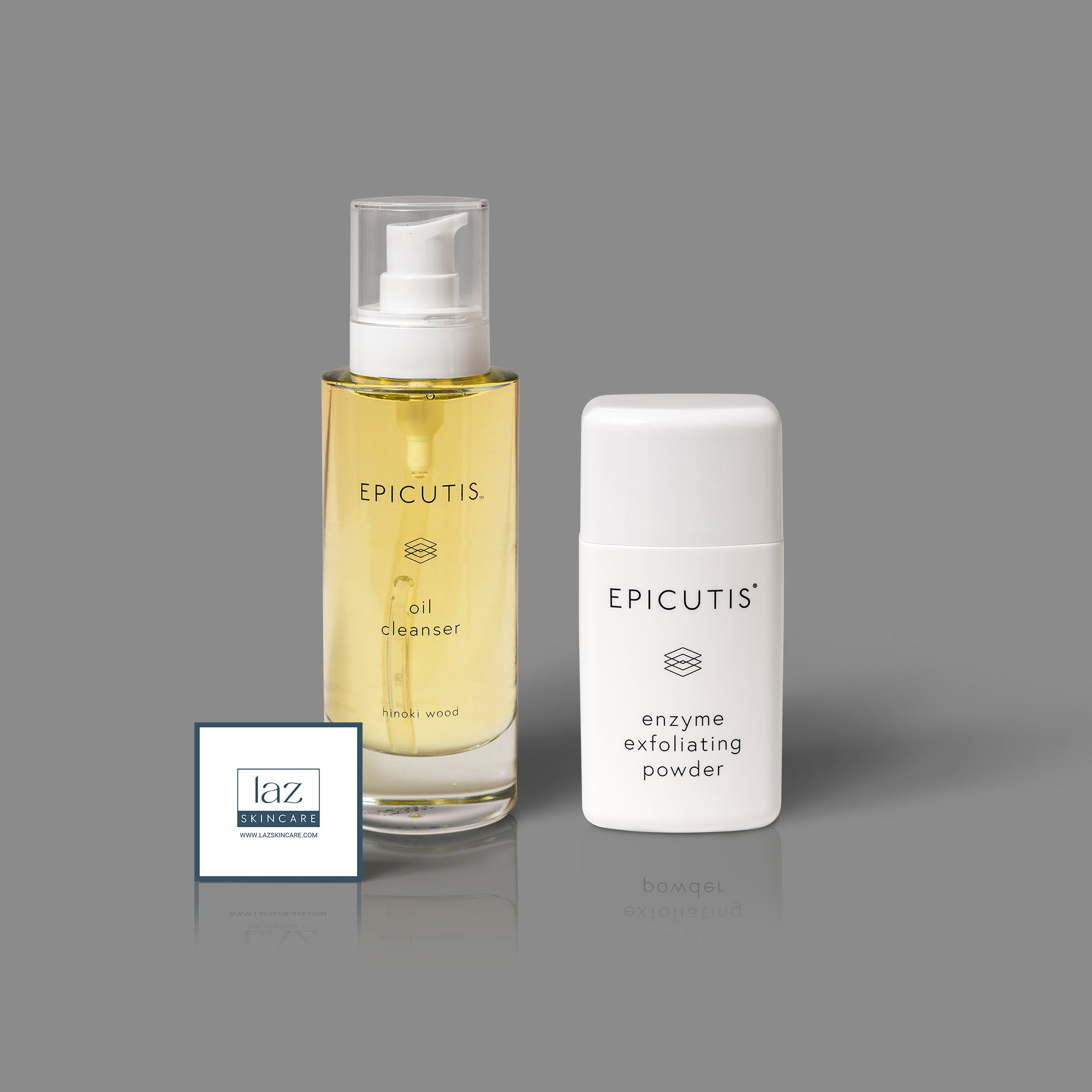
The Epicutis Cleansing Essentials Set is what I use when texture is the complaint and the skin cannot take an acid. Enzymes digest surface buildup rather than dissolving or abrading it, and the oil cleanser underneath is repairing the barrier at the same time.
Oil cleanser daily, enzyme powder mixed into it two or three times a week.
Enzymes work at the surface and no deeper. If your texture comes from congestion sitting inside the pore, or from established pigment, an acid will reach further and this will not. That is a real limitation rather than a gentle-is-better claim.
Why is my skin rough even though I exfoliate?
Because texture is usually three things at once, and exfoliation only addresses one of them. After treating a lot of rough skin, the pattern is consistent.
Dehydration. Skin short of water feels rough and bumpy even when it looks perfectly clear. This is the most common cause and the least treated.
Low-grade inflammation, which changes how the surface sits and feels.
A disrupted barrier, which cannot hold the smoothness even when the other two improve.
Actual buildup of dead cells, which is real and is the least of it in most people I see.
So the person exfoliating twice a week and getting nowhere is treating the fourth item and worsening the other three. More exfoliation strips lipids, which increases dehydration and inflammation, which produces more roughness.
Which is why the first thing I change for texture is the cleanser rather than the exfoliant.
Protease and lipase. Two enzymes for two kinds of surface buildup.
Enzymes, acids or scrubs: which exfoliation is right?
They do genuinely different things, and the strongest is not the best by default. Matching the method to the cause is what decides whether exfoliating helps you or sets you back.
Enzymes digest the proteins holding dead cells together. Surface-level, self-limiting, and not dependent on pH, so they suit fragile or reactive skin. They will not reach into a pore.
Acids work deeper. Better for congestion, pigment and established texture, and considerably more likely to irritate if your barrier is already compromised.
Scrubs abrade mechanically. The least controllable of the three, and the one most likely to cause microtears on thin or inflamed skin.
The Epicutis Cleansing Essentials Set uses protease and lipase, which break down proteins and oils respectively. Two enzymes rather than one is what lets it handle both kinds of surface buildup.
Hyvia, the biotech chia seed oil is doing the part that matters most for texture. Hydration reaching deeper than the surface softens roughness that exfoliation never touches.
Hinoki wood oil and sunflower seed oil handle the inflammation and the lipid balance, which are the other two contributors from the list above.
Three of the four causes addressed in a cleansing step. That is the argument.
How long before rough texture improves?
Around two weeks when hydration is the underlying cause, which it usually is. Longer if there is genuine congestion involved, and that may need an acid brought in once the barrier can tolerate one.
I start texture protocols in clinic with barrier-first cleansing rather than with an exfoliant, and the clients who improve fastest are almost always the ones who exfoliated less rather than more. Paired with hydration and gentle actives, two weeks is a realistic marker.
Texture responds to consistency rather than to intensity. That is the whole lesson.
Who it does not suit: anyone whose texture is congestion inside the pore, who needs a salicylic acid or professional extractions. Anyone with established pigment contributing to the unevenness. And anyone who dislikes an oil cleanser, since that is the format.
Texture responds to consistency rather than intensity.
What to do
Cut your current exfoliation back before you add anything. If you are using acids more than twice a week, that is the first change.
Morning and evening, massage the oil cleanser from the Epicutis Cleansing Essentials Set into dry skin, add a little lukewarm water, massage again, rinse.
Two or three times a week, mix the enzyme powder into the oil cleanser on already-cleansed skin. Leave it one to two minutes if your skin is comfortable with that, then rinse.
Follow with a hydrating serum and a barrier-repair moisturizer while skin is still damp. This is where the texture change actually comes from.
Give it a fortnight before judging. If nothing has moved, the cause is likely congestion and needs a different tool.
No brushes, cloths or scrubs alongside this. You would be reintroducing the mechanical damage the enzymes exist to avoid.
Smoother within days from the hydration. Real texture change at two weeks. Anything still there at six weeks is not a buildup problem and needs looking at properly.
Product discussed: Epicutis Cleansing Essentials Set. Stocked because it is used in the clinic. The full ingredient list and current details are on the product page.
Rough texture from dehydration and rough texture from congestion feel identical under your fingers and need opposite treatments. Book a consultation, in person at the NYC clinic or virtually, and I will tell you which you have.
Last reviewed
Choosing a selection results in a full page refresh.