Diagnostic6 min read

Everything burns is the sentence I hear most from reactive clients. If sunscreen stings, that is information about your barrier rather than a reason to skip it, and skipping it is the worst available response for skin that is already inflamed.

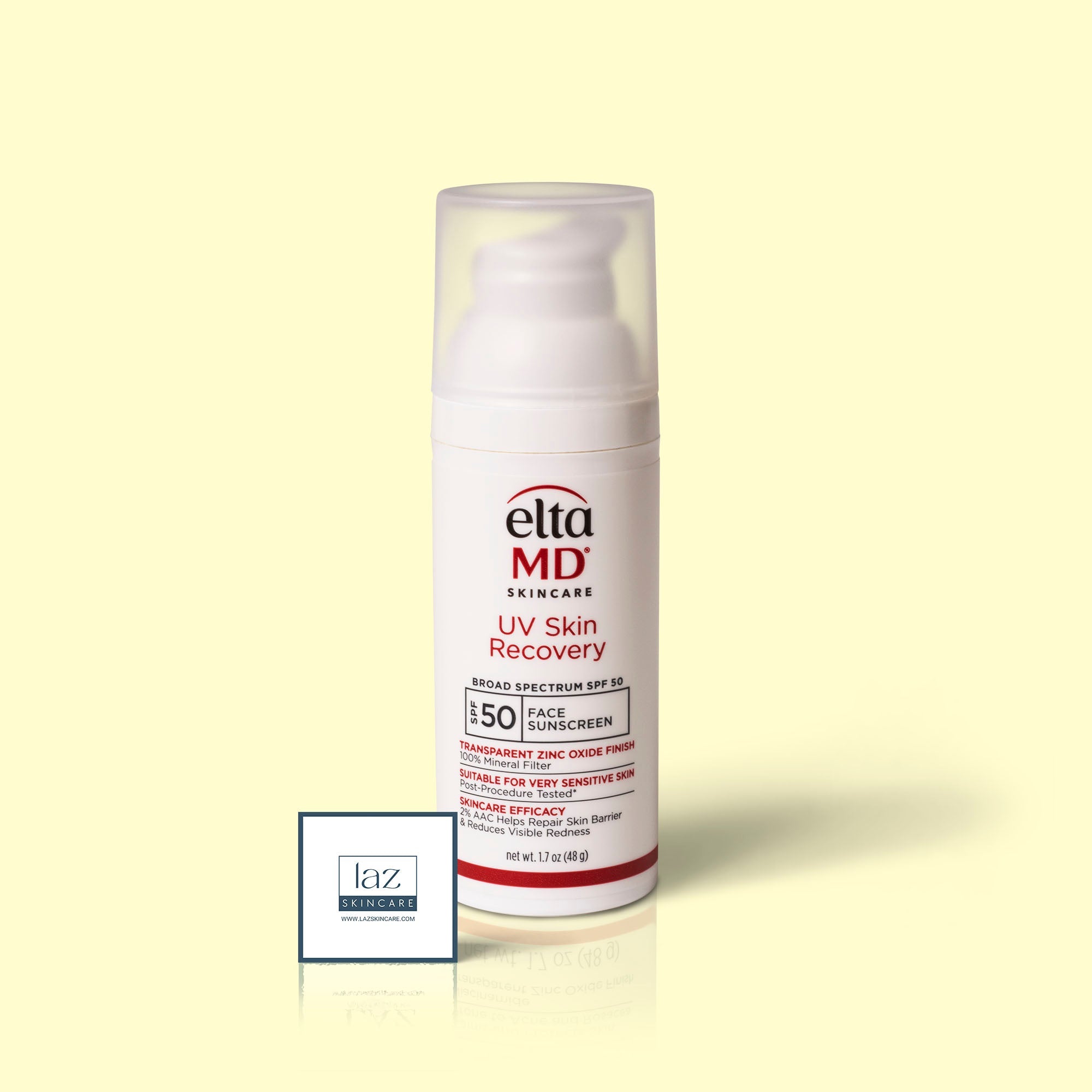
The EltaMD UV Skin Recovery SPF 50, stocked by LAZ Skincare.
What I reach for when someone tells me sunscreen burns.

The short answer

The EltaMD UV Skin Recovery SPF 50 is the one I reach for when someone tells me sunscreen burns. Zinc oxide as the only filter, a four-ceramide complex with cholesterol rebuilding the barrier underneath, and centella and amino acids working on the reactivity itself.

Generously to face and neck, last step in the morning.

It will not treat rosacea and it does not replace anything a doctor has prescribed. What it does is remove the reason people with reactive skin stop wearing sunscreen, which is worth more than it sounds, because the skipping is what was making everything worse.

Why does sunscreen sting my face?

Because a thinned barrier lets ingredients reach nerve endings that should never encounter them. The sunscreen has not changed. Your skin's ability to hold it at a distance has.

Four things make it more likely:

  • Chemical filters. They absorb UV and convert it to heat, and on compromised skin some people feel that as stinging. Mineral filters sit on the surface instead.
  • Fragrance and alcohol, which are common in lighter formulas and are among the most frequent culprits.
  • A barrier already damaged by over-exfoliation or a hard winter, in which case almost anything will sting.
  • Recent treatment. Skin in the days after a peel or laser is deliberately open and reacts to things it normally tolerates.

The dangerous conclusion is that you cannot wear sunscreen. UV drives inflammation, deepens redness and slows healing, so unprotected reactive skin gets steadily more reactive. The stinging is a formula problem and it is solvable.

The EltaMD UV Skin Recovery SPF 50 from the LAZ Skincare range.
Zinc oxide as the only filter. The rest of the range pairs it with a chemical one.

What sunscreen is best for rosacea and sensitive skin?

Mineral filters, no fragrance, and ideally barrier ingredients doing repair while it protects. The EltaMD UV Skin Recovery SPF 50 is built for exactly this brief.

Zinc oxide at 12.9 percent is the only sunscreen filter in it. That distinguishes it from the other formulas in this range, which pair zinc with a chemical filter. If you specifically want mineral-only, this is the one.

Ceramides NP, NS, EOP and AP with cholesterol are the reason I rate this above other gentle sunscreens. Four ceramides plus cholesterol is a genuine barrier-repair complex rather than a token inclusion, and it is unusual to find one inside an SPF.

Centella asiatica calms inflammation and supports healing. It is my default botanical for microneedling and rosacea clients, and it is well tolerated by skin that rejects most plant extracts.

Taurine, glycine and arginine are amino acids that settle reactivity and support the skin's own defences against oxidative stress.

Salicyloyl phytosphingosine and pongamia pinnata seed extract target redness and environmental stress respectively.

No fragrance. On reactive skin that single absence resolves more complaints than any ingredient present.

Can a sunscreen actually reduce redness?

Two ways, and they work on different timescales. A green-tinted version colour-corrects redness immediately, which is cosmetic and genuinely useful on a bad day. The barrier ingredients work slowly on why the redness is there.

This comes in a clear version and a green-tinted one. The tint is the reason my rosacea and post-laser clients tend to prefer it, since it means going out without makeup on a day they would otherwise have stayed in.

I send clients out with this after peels, microneedling and laser, when skin has almost no defences of its own and the wrong sunscreen would undo the treatment.

Who it does not suit: anyone congested or acne-prone, who will find it heavier than the oil-free option. Anyone expecting it to treat diagnosed rosacea rather than protect skin that has it. And anyone whose stinging is delayed and itchy rather than immediate, which suggests an allergy and needs identifying properly.

EltaMD UV Skin Recovery SPF 50, part of the LAZ Skincare range.
Four ceramides and cholesterol inside an SPF. That is unusual.

What to do

  1. Patch test on the jaw for three days first. Reactive skin has earned that step, even with a formula this plain.
  2. Apply the EltaMD UV Skin Recovery SPF 50 generously to face and neck as the last step of your morning routine, about fifteen minutes before you go out.
  3. Choose the green-tinted version if visible redness is your main concern. The clear one if it is not.
  4. Reapply at least every two hours outdoors, and more often during a flare or while recovering from a treatment.
  5. Pair it with a barrier-repair cream while you are actively healing. Sunscreen protects, it does not rebuild.

After a professional treatment, follow your practitioner's timing on when to restart sunscreen rather than mine.

Comfort from the first application, which is the point. Less reactivity over weeks, as the barrier ingredients accumulate and the UV stops undoing your progress.

Sources and further reading

Product discussed: EltaMD UV Skin Recovery SPF 50. Stocked because it is used in the clinic. The full ingredient list and current details are on the product page.

If sunscreen has stung before, working out whether it was the filter, the fragrance or your barrier decides what to try next. Book a consultation, in person at the NYC clinic or virtually, and we will go through what you have already tried.

Last reviewed