Instructional6 min read

If your face is hot and tight after washing, that is not your sensitive skin revealing itself. That is a chemical reaction you paid for and have been repeating twice a day.

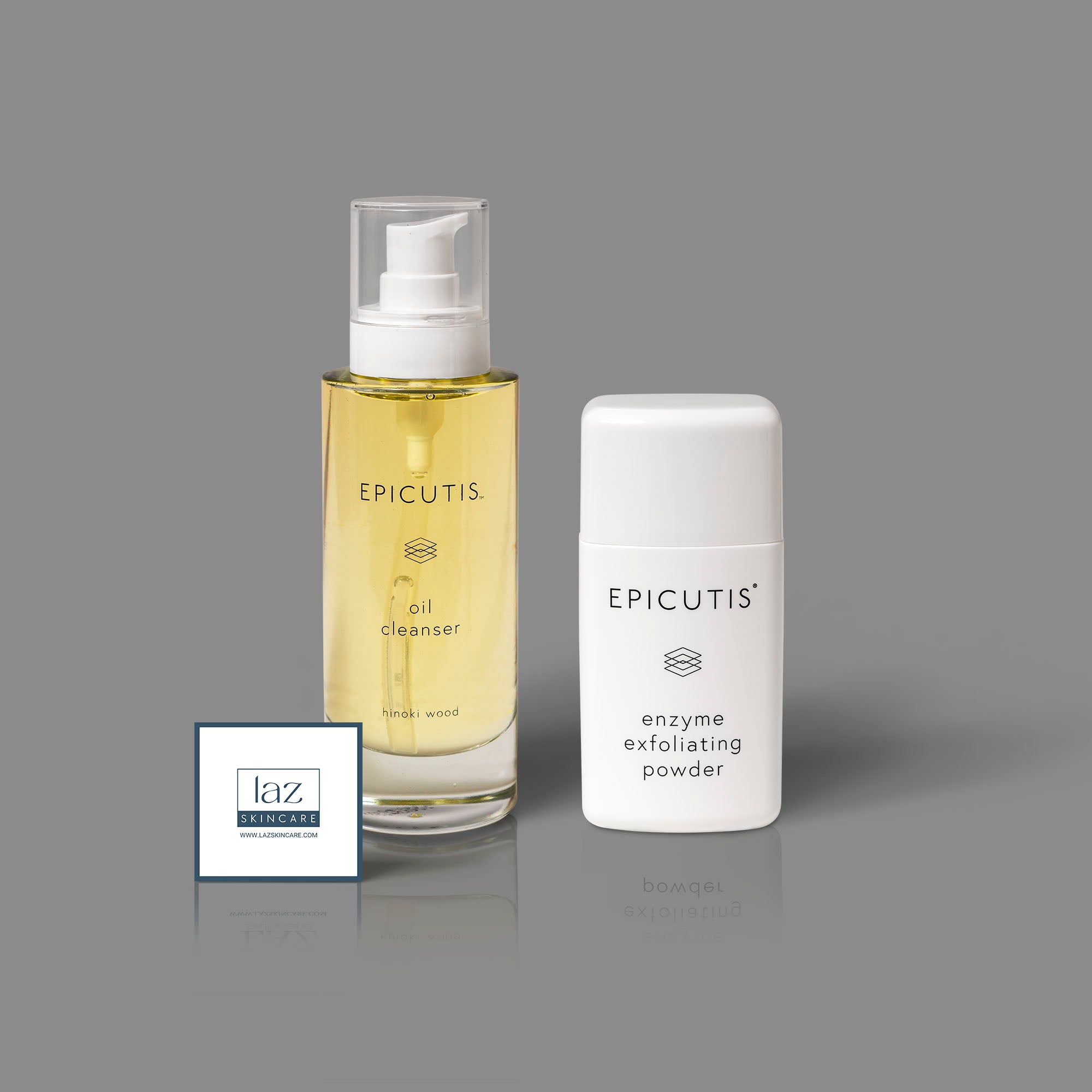
The Epicutis Cleansing Essentials Set, stocked by LAZ Skincare.
Cleaning with lipids rather than detergents. That is the whole difference.

The short answer

The Epicutis Cleansing Essentials Set is what I move reactive clients onto first, because an oil cleanser removes what needs removing without surfactants doing the work. No sulfates, no synthetic fragrance, and hinoki and chia oils actively calming while it cleans.

Oil cleanser daily. Enzyme powder mixed into it two or three times a week, and skip those days entirely if your skin is flaring.

A cleanser cannot treat redness. What it can do is stop causing it twice a day, which sounds modest until you realise how many reactive clients are red because of the first thirty seconds of their routine rather than despite it.

Why does my face go red after washing?

Because something in the process has stripped lipids from the barrier, and the skin responds with inflammation. The flush is not your skin being dramatic. It is a measurable reaction to losing something it needed.

Four culprits, usually working together:

  • Harsh surfactants. Sulfates and aggressive foaming agents remove your own lipids alongside the dirt, and they cannot tell the difference.
  • Exfoliating washes. A daily cleanser containing acid is exfoliation you have stopped counting, and reactive skin cannot absorb it.
  • Hot water, which strips lipids as efficiently as any detergent and feels wonderful while doing it.
  • Friction. Rubbing, brushes, rough flannels and towelling dry with any vigour. On inflamed skin this matters far more than people credit.

Notice that only one of those is about which product you bought. Technique, temperature and frequency account for most of it, which is good news because they are free to change.

The Epicutis Cleansing Essentials Set from the LAZ Skincare range.
Lukewarm water, thirty seconds, patted dry. Never rubbed.

What makes a cleanser safe for reactive skin?

Cleaning with lipids rather than with detergents. Oils dissolve oils, so an oil cleanser lifts sunscreen and sebum without needing surfactants to force the issue, and the barrier stays where it was. The Epicutis Cleansing Essentials Set works on that principle.

Hyvia, the biotech chia seed oil is the reason this suits red skin specifically. It reduces inflammation at cell level while it hydrates, so the cleanse leaves the skin calmer than it found it rather than merely no worse.

Hinoki wood oil from Japanese cypress is soothing and antimicrobial. I find it helps with the low-grade persistent redness you see in compromised skin, without anything astringent involved.

Sunflower seed oil leads the formula, rich in linoleic acid and vitamin E. Reactive skin is nearly always short of linoleic acid, so this is replacing something that has gone missing.

Meadowfoam and macadamia oils provide the slip that lets you clean without pressure. On inflamed skin, reducing friction is a real intervention rather than a nicety.

The enzyme powder uses protease and lipase to digest surface buildup rather than abrade it, which is why it can go on skin that a scrub would set off.

No sulfates, no synthetic fragrance, nothing foaming. On reactive skin the absences are the product.

What changes when you fix the cleansing step?

The post-wash flush goes within days, because you have simply stopped triggering it. Baseline redness takes two to four weeks to come down, since the barrier needs an uninterrupted run to rebuild.

What I see most often in clinic is people making their redness worse without knowing it, using an exfoliating wash or a foaming cleanser they were told was gentle. They have usually changed every other product in the routine looking for the culprit.

Redness is not always a sign you are doing something wrong. Sometimes it is a sign your skin needs more protection and less handling.

Who it does not suit: anyone who dislikes an oil texture, since there is no way around that here. Anyone congested across the whole face, who may need a different first cleanse. And anyone expecting a cleanser to treat rosacea, which needs a diagnosis and usually a prescription.

Epicutis Cleansing Essentials Set, part of the LAZ Skincare range.
Most of the fix is technique and temperature, and those are free.

What to do

  1. Massage the oil cleanser from the Epicutis Cleansing Essentials Set into dry skin for around thirty seconds. Add a little lukewarm water, massage again, rinse.
  2. Lukewarm, never hot. Test it on your wrist if you are unsure, because your face is a poor judge of this.
  3. Two or three times a week, mix the enzyme powder into the oil cleanser on already-cleansed skin. Skip it entirely during a flare.
  4. Pat dry with a soft towel. Do not rub. Friction is doing more of your redness than you think.
  5. Follow with a calming barrier moisturizer while the skin is still damp, and sunscreen every morning.

Cleanse twice a day at most. If your skin is very reactive, water alone in the morning is a legitimate choice.

The post-wash flush should stop within a few days. Baseline redness at two to four weeks. If nothing shifts by then, the cleanser was not the driver and the plan needs revisiting.

Sources and further reading

Product discussed: Epicutis Cleansing Essentials Set. Stocked because it is used in the clinic. The full ingredient list and current details are on the product page.

If you cannot identify what is triggering your redness, the cleanse is the first place I would look and the last place most people do. Book a consultation, in person at the NYC clinic or virtually, and we will go through your routine in order.

Last reviewed