9 min read

An eye cream can only lighten a dark circle if it works on what is actually causing it. Dark circles come from three different places, and if yours are not caused by pigment, a pigment ingredient will not lighten them, however long you use it. Once you know which kind you have, you know what skincare can change.

The short answer

Dark circles come from three causes: extra pigment in the skin under your eyes, blood vessels showing through skin that is very thin, and shadow cast by a hollow beneath the eye. Most people have a mix. Skincare can fade the pigment and make thin skin look less see-through, and daily sunscreen protects that progress. Where a hollow comes from fat that has thinned, some ingredients can help it look fuller over months, and in-clinic procedures do the most for a deep hollow.

Read time 9 min
Suits All skin types, Sensitive, Mature

Why the skin under your eyes shows color

The skin under your eyes is the thinnest on your face. Underneath it sits a ring of muscle and a network of small blood vessels, and because the skin over them is thin, their color shows through more than it would anywhere else.

With age, that skin gets thinner as collagen declines, and the fat pads that cushion the area shrink and shift. Both make the color and the contours underneath easier to see. Genetics plays a large part too, which is why dark circles often run in families and can show up in childhood.

The three kinds of dark circles

Pigmented circles are brown. The skin under the eye holds more melanin than the skin around it. This can be inherited, and it can build up from sun exposure or from rubbing. Itchy eyes from allergies or eczema are a common reason for rubbing, and each time the skin is irritated it can leave a little more pigment behind. Deeper skin pigments much easier, which is why this kind is especially common on deeper skin tones.

Vascular circles are blue, purple or pink. The color comes from blood vessels showing through thin skin rather than from pigment. They tend to look darker after a short night, during allergy season or when your nose is congested, because the small vessels around the eyes fill and widen.

Structural circles are shadow. A groove between the lower eyelid and the cheek, called the tear trough, catches less light than the skin around it. It can be inherited from the shape of your face, or it can deepen with age as the fat pads shift. Overhead lighting makes it look darker.

One cause is worth knowing about on its own. Prostaglandin analogs are ingredients used in some prescription eye drops for glaucoma and in lash growth serums such as Latisse and RevitaLash. They can darken the skin of the eyelids, and they can also make the fat around the eyes shrink, which deepens the hollow under the eye. The darkening usually fades after stopping, and the fat loss often improves only partly.

If your dark circles or hollows appeared after you started a lash serum, check its ingredient list for a prostaglandin analog. If you started a prescription eye drop, ask the doctor who prescribed it rather than stopping it yourself.

How to tell which kind you have

Stand in natural daylight in front of a mirror. Gently stretch the skin under one eye outward with a fingertip and watch the color.

If the color stays the same when the skin is stretched, it is pigment. If the darkness fades or disappears, it is mostly shadow from a hollow. If it turns more purple or blue, the skin is thin and the blood vessels are showing through.

Many people find more than one answer, which means the plan below covers more than one step.

Three cross-sections of under-eye skin side by side: brown pigment dots in the top layer, blue blood vessels showing through thin skin, and a shadow falling into a groove.
Brown pigment, visible blood vessels and shadow each need a different approach, and many people have more than one.

How to lighten dark circles

Protect the skin under your eyes

Sun darkens pigmented circles and breaks down the collagen that keeps the skin there from looking thin. Wear broad spectrum SPF 30 or higher every morning, all the way up to your lower lashes, and reapply it throughout the day. Mineral sunscreens made for the eye area tend to sting less there. Sunglasses that block UV protect the skin that sunscreen often misses.

If your eyes itch, stop the rubbing at its source. Managing allergies or eczema with your doctor or pharmacist often does more for pigmented circles than a cream can, because rubbing keeps adding pigment while you are trying to fade it.

For brown, pigmented circles

These ingredients work on excess pigment, not on your natural skin tone. Each one has its own article in the Ingredients that help section below.

Vitamin C slows pigment production and protects against the sun damage that adds to it. It also helps the skin build collagen, which matters for thin skin too.

Niacinamide slows the transfer of pigment to the skin cells around the pigment cells, and it supports the barrier of this thin, easily irritated skin.

Tranexamic acid quiets the inflammatory signals that tell pigment cells to make more. Most of its research is on melasma, which shares the same pigment pathway.

For thin skin and visible blood vessels

Here the goal is thicker, firmer skin that hides more of what sits underneath it.

Retinoids increase collagen and thicken the living layers of the skin over months. Use one made for the eye area, or a gentle strength of retinol, two or three nights a week to start.

Peptides and growth factors support collagen production without the dryness some retinoids cause, which makes them useful when the skin around your eyes is reactive.

Hyaluronic acid holds water in the skin. Hydrated skin looks smoother and reflects light more evenly, which softens the look of thin, crepey skin from the day you start.

Vitamin C may help here too. In one small study of 14 people, a ten percent vitamin C lotion used for six months kept the under-eye area from looking as dark as the untreated side. The researchers think slightly thicker skin over the blood vessels is the reason, although the thickening was too small to be certain.

For a hollow from lost fat

Here the goal is to support the fat pads.

Volufiline is a plant extract from the root of Anemarrhena asphodeloides that encourages fat cells to store more fat, which can help hollow areas look fuller. The research so far is small and comes from the company that developed it.

Adipeau Volume Cream is built around its own patented ingredient, designed to support the fat pads and the density of the skin over them. It is not an instant plumper. In our clinic, we have seen dark circles from lost fat improve gradually after about three months of consistent use.

Where in-clinic procedures help

A deep hollow, or a tear trough that comes from the shape of your face, will not change with skincare. Fillers placed by a doctor or nurse injector can soften that hollow. Lasers can work on stubborn pigment or visible veins, and microneedling can firm thin skin. Your provider will match the procedure to the cause, and a good routine before and after helps the result last.

Two cross-sections of skin: on the left a thin layer with blood vessels clearly visible beneath, on the right a thicker layer full of collagen fibers with the vessels mostly hidden.
As collagen builds up, the skin under your eyes thickens and less of the color beneath it shows through.

Common questions

How long do dark circles take to lighten?

Pigmented circles usually start to look lighter after eight to twelve weeks of consistent use and keep improving over three to six months. Thin skin and visible blood vessels respond more slowly, over six months or more, because the change depends on new collagen. A hollow from lost fat usually needs at least three months before it looks fuller.

Around week six is where people tend to give up, because the change is gradual and hard to see in the mirror. Keep going without changing anything. The photo routine in the How to use it section below makes the progress easier to see.

Will more sleep get rid of my dark circles?

No, not on its own, unless short sleep is the main cause. In one study, the same people photographed after a night without sleep had darker circles and more swollen eyes. Good sleep helps the vascular kind look its lightest, and it does not change pigment or a hollow.

Are dark circles more common on deeper skin tones?

Yes, the pigmented kind is. Deeper skin pigments much easier, and the skin under the eyes is thin and easily irritated. Gentle products, daily sunscreen and stopping the rubbing protect against new pigment while the ingredients above fade the old.

Can I use my face serum under my eyes?

Often, yes. Many vitamin C, niacinamide, peptide and hyaluronic acid serums are comfortable there. Retinoids and exfoliating acids are more likely to sting the thin skin there, and a version made for the eye area is gentler.

Can I work on dark circles during pregnancy?

Yes, with some ingredient changes. Vitamin C and niacinamide are generally considered safe, and hyaluronic acid is commonly used. Most retinoids are avoided. Other ingredients depend on your doctor's advice and your own preference, so check with your OB or midwife.

How to use it

  • Do the stretch test in natural daylight before choosing products, so they match the kind of dark circle you have.
  • Apply eye products with your ring finger, in small dots along the bone around your eye, and pat rather than rub.
  • Introduce one new eye product at a time, and give each one two weeks before adding the next.
  • Start a retinoid around the eyes two or three nights a week, and increase it as your skin allows.
  • Wear broad spectrum SPF 30 or higher every morning up to your lower lashes, reapply it throughout the day, and wear sunglasses that block UV.
  • Photograph your skin on day one, in the same spot and in natural daylight, and again every four weeks.
Start with the basics Skincare 101: Know Your Skin, Build Your Basics
Evidence and sources
  • Vrcek I, Ozgur O, Nakra T. Infraorbital Dark Circles: A Review of the Pathogenesis, Evaluation and Treatment. Journal of Cutaneous and Aesthetic Surgery, 2016. The causes of dark circles, from pigment and thin skin to the tear trough, and the range of options from skincare to procedures. Read the review
  • Sarkar R, Ranjan R, Garg S, Garg VK, Sonthalia S, Bansal S. Periorbital Hyperpigmentation: A Comprehensive Review. The Journal of Clinical and Aesthetic Dermatology, 2016. The pigmented, vascular and structural types, the stretch test and glaucoma eye drops. Read the review
  • Sheather L, Kailani Z, Qureshi AR, Somani Z, Han S, Somani S. Periorbital Fat Atrophy With Topical Bimatoprost in Glaucoma, Ocular Hypertension, and Cosmetic Use: Systematic Review and Meta-Analysis. Ophthalmic Plastic and Reconstructive Surgery, 2026. Fat loss around the eyes with bimatoprost, the prostaglandin analog in Latisse. Read the review
  • Abalo-Lojo JM, Vazquez Ferreiro P, Knight Asorey M, Estevez Colmenero A, Gonzalez F. Improvement of Prostaglandin-Associated Periorbitopathy after Discontinuing Treatment. Turkish Journal of Ophthalmology, 2023. Fat loss under the lower eyelid that recovered only partly in the year after stopping. Read the study
  • Ohshima H, Mizukoshi K, Oyobikawa M, et al. Effects of vitamin C on dark circles of the lower eyelids: quantitative evaluation using image analysis and echogram. Skin Research and Technology, 2009. The six-month vitamin C study in 14 people described above. Read the study
  • Sundelin T, Lekander M, Kecklund G, Van Someren EJW, Olsson A, Axelsson J. Cues of Fatigue: Effects of Sleep Deprivation on Facial Appearance. Sleep, 2013. The study showing darker circles and more swollen eyes after a night without sleep. Read the study

A note on the evidence. The causes of dark circles are well described. Research on skincare for the under-eye area itself is thin: the vitamin C study was small, only one of the two forms of vitamin C it tested made a difference, most research on pigment ingredients was done on melasma rather than on the eye area, and the reviews above note that few options have been tested in large trials. That is why matching the approach to the cause matters so much. What we describe here combines that research with what we see in the clinic.

Last reviewed

Ingredients that help

What each one does, how it works and how to use it.

Products for Dark Circles

  • Face Reality

    Antioxidant Peptide Eye Gel

    4.5 out of 5.0 stars

    $48.00

  • Biojuve

    Biojuve Travel Kit

    4.5 out of 5.0 stars

    $70.00

  • iS Clinical

    $75.00

  • Revision

    $125.00

  • Calecim

    Eye Contour Lifting Cream

    5.0 out of 5.0 stars

    $160.00

  • Hydrinity

    Eye Renew Complex

    4.7 out of 5.0 stars

    From $20.00

  • Plated

    Eye Serum

    4.6 out of 5.0 stars

    $138.00

  • SkinBetter Science

    EyeMax AlphaRet Overnight Cream

    4.8 out of 5.0 stars

    $135.00

  • Young Goose

    $151.50

  • SkinBetter Science

    InterFuse Treatment Cream EYE

    5.0 out of 5.0 stars

    $135.00

  • Biojuve

    Living Biome Essentials Serum Duo

    4.9 out of 5.0 stars

    $220.00

  • Pavise

    Precision Eye Lift

    4.7 out of 5.0 stars

    $128.00

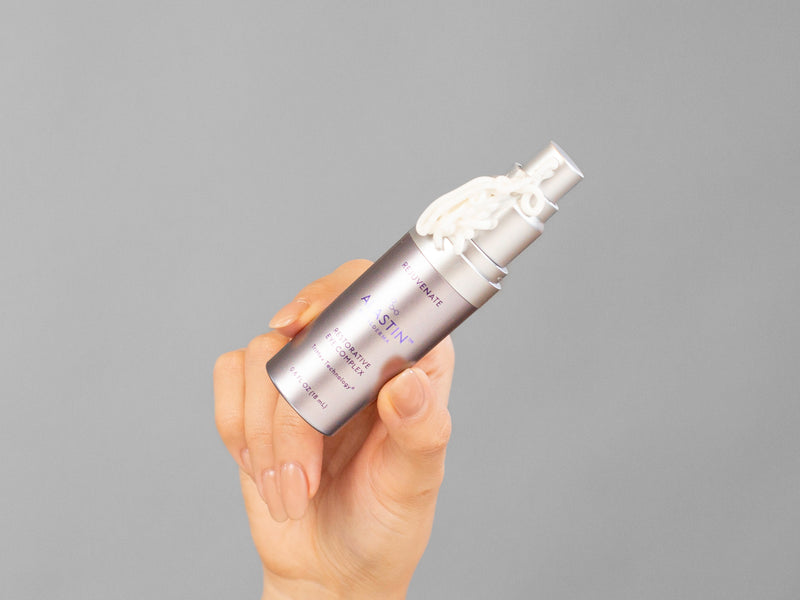
  • Alastin

    Restorative Eye Complex

    4.9 out of 5.0 stars

    $128.00

  • KrX Aesthetics

    $16.00

  • Environ

    $110.00

  • Vivant

    Wink Eye Rejuvenation Cream

    5.0 out of 5.0 stars

    $94.00

More Skin Concern Guides

View all

Illustration of a young woman with fair skin, with small dark blackheads across her nose and tiny pale whiteheads on her forehead.
  • by Laziza Strait

Blackheads and Whiteheads: What Clogs a Pore and How to Clear It

Blackheads and whiteheads are clogged pores that have not turned red or sore. Here is what forms the plug, why many nose blackheads are something else, and how to clear them.

Read moreabout Blackheads and Whiteheads: What Clogs a Pore and How to Clear It

Close illustration of the eyes of a South Asian woman with medium-brown skin, with darker brown-purple shadows beneath both eyes.
  • by Laziza Strait

Dark Circles: What Causes Them and What Skincare Can Change

Dark circles come from extra pigment, blood vessels showing through thin skin, or shadow from a hollow under the eye. Here is how to tell which you have and what skincare can change.

Read moreabout Dark Circles: What Causes Them and What Skincare Can Change

Illustration of an East Asian woman in her late fifties with fine crisscross lines on her cheek, beside a magnified circle showing stiff, tangled collagen fibres.
  • by Laziza Strait

Glycation: How Sugar Stiffens Skin and What Can Slow It

Glycation is sugar bonding to the collagen in your skin, leaving it stiffer and more yellow over the years. Here is how it happens, what speeds it up and what can slow it down.

Read moreabout Glycation: How Sugar Stiffens Skin and What Can Slow It