8 min read

Skin loses firmness slowly, and much of that loss is collagen broken down by the sun years before it shows. If your skin has started to feel softer or slower to spring back, skincare can help it hold its shape, as long as you know where its limits are.

The short answer

Firmness comes from collagen and elastin, the proteins that give the deeper layer of your skin its strength and its spring. Both decline with age, and sun speeds that up. Retinoids, peptides, growth factors and vitamin C help your skin make and protect collagen, which improves how firm your skin feels and looks. It is extremely hard to lift skin that has sagged, or to restore lost volume, with skincare, and that is where in-clinic procedures help.

Read time 8 min
Suits All skin types, Mature

What keeps skin firm

The deeper layer of your skin, the dermis, is built from two proteins. Collagen gives it strength and thickness. Elastin gives it spring, which is what lets skin snap back after you smile or press it. Both are made by cells called fibroblasts.

Fibroblasts need intact collagen around them. They attach to it and stretch against it, and that tension keeps them making new collagen. When the collagen around them is broken into fragments, they have less to hold onto, they flatten out, and they make less. Research on older skin found exactly that, which is why collagen loss tends to speed itself up.

The top layers of skin play a part too. They are not dead. They signal to the deeper layers to regulate collagen, hydration and cell renewal, which is why a healthy barrier matters for firmness as well as comfort.

Why skin loses firmness

Age is the steady background. From your mid-twenties your skin makes a little less collagen each year, and adult skin makes very little new elastin.

Sun is the largest outside cause. Ultraviolet light breaks down collagen and damages elastin, and years of it leave the deeper layer weaker than age alone would. Inflammation is one of the root causes of aging skin, and smoking, poor sleep and repeated irritation all add to it. Genetics decides much of your starting point.

Firmness, volume and sagging

Under your skin sit pads of fat in separate compartments, over muscle and bone. With age, those compartments shrink and shift at different rates, and the bone beneath them changes too. The jowl compartment sits lowest, and as the tissue above it loosens, the jawline softens.

This is worth knowing, because it explains what skincare can and cannot reach. Collagen and elastin live in the skin, and skincare works there. Fat and bone sit below the skin, and a cream does not move them.

Your neck and jawline

The skin on your neck is thinner than on your face and has fewer oil glands, which is why it often shows loss of firmness early. It is also the area most often missed with sunscreen and serums. Carrying your routine down to your neck and chest is one of the simplest changes you can make.

Two panels: a star-shaped cell stretched across a dense mesh of long collagen fibers with new fibers forming, and the same cell small and rounded among short broken fiber fragments.
Collagen-making cells work hardest when they can stretch against intact collagen, which is why collagen loss tends to speed itself up.

How to support firmness

Protect the collagen you have

Wear broad spectrum SPF 30 or higher every morning on your face, neck and chest, and reapply it throughout the day. Each ingredient here has its own article in the Ingredients that help section below.

Vitamin C is an antioxidant that protects collagen from sun damage, and your skin needs it to make new collagen.

Use a retinoid

Retinoids prompt fibroblasts to make more collagen. In a small study of older adults, a 0.4 percent retinol applied for one week roughly tripled the new collagen measured in skin samples and increased elastin as well. Start two or three nights a week on clean, dry skin and build up as your skin allows.

Add ingredients that signal for collagen

Peptides are short chains of amino acids. Signal peptides tell fibroblasts to make more collagen and elastin, and small trials have measured firmer, more elastic skin over one to four months.

Growth factors are the messages your own skin uses to start repair, and they prompt collagen production in the same way.

Exosomes carry growth factors and other signals between cells. In the clinic, firmness and quality in aging skin are where we see some of the clearest results, and some clients use them in place of a retinoid when their skin is reactive or their tone is deeper.

PDRN and NAD+ are newer ingredients. PDRN is usually made from fragments of salmon DNA and supports repair. NAD+ is a molecule your cells use for energy and repair, and it declines with age, which is why it is being studied as a way to help older skin cells, including fibroblasts, keep working. Their research is earlier than for the ingredients above.

Growth factors, exosomes and many peptides are large molecules, and a well-made formula is designed to carry them through intact skin. That detail is often not on the label. The products we carry have been used in our clinic and seen to work, which makes them an easy place to start.

Volume is a different job

Volufiline is aimed at the fat beneath your skin rather than at collagen. It encourages fat cells to store a little more fat, which can soften hollowness in the cheeks, temples or under-eyes. That is a different job from firming skin, and it works alongside the ingredients above rather than in place of them.

Where in-clinic procedures help

A cream works on the skin, and some changes sit deeper. Microneedling and ultrasound devices prompt collagen at a depth topicals cannot reach, and fillers replace lost volume directly. These are done by a trained provider, and a good routine before and after helps the result last longer.

Side cross-section of facial tissue in stacked layers: skin with collagen fibers on top, separate rounded fat pads below, then muscle, then bone, with the skin layer highlighted.
Collagen and elastin sit in the skin, where skincare can reach them, while fat pads and bone sit below it.

Common questions

How long does it take to see firmer skin?

Most people notice smoother, more comfortable skin within four to eight weeks. A change in firmness takes longer, usually three to six months, and keeps building over a year, because new collagen forms slowly.

Around week eight is where people tend to give up, because the mirror shows little change yet. Keep going without changing anything. The photo routine in the How to use it section below makes the slow change easier to see.

Can a cream lift sagging skin?

Not on its own. Skincare can make skin firmer and thicker, which helps it hold its shape, but it is extremely hard to lift fat or tissue that has shifted downward with skincare. For that, in-clinic procedures go further.

Does collagen in a cream replace my own collagen?

No. Collagen in a cream is not the collagen in your skin. It is too large to reach the deeper layer, and it hydrates the surface instead. Ingredients that prompt your skin to make its own collagen are the ones that work on firmness.

Should I use my products on my neck?

Yes. If you are working on prevention, the retinoid, peptides and sunscreen you use on your face work well on your neck too. Neck skin is thinner, which means a retinoid can feel stronger, so start it there less often than on your face.

If your neck already shows lines, crepiness or a loss of firmness, a product made specifically for the neck can do more. Not all of them work well. The ones we carry have been used in our clinic and seen to work: SkinBetter Techno Neck Perfecting Cream, Alastin Restorative Neck Complex and KrX Neck Lift Intensive Firming Cream.

Can I work on firmness during pregnancy?

Yes, with some ingredient changes. Vitamin C and niacinamide are generally considered safe, and sunscreen is commonly used. Most retinoids are avoided. Peptides, growth factors, exosomes and the other ingredients here depend on your doctor's advice and your own preference, so check with your OB or midwife.

How to use it

  • Wear broad spectrum SPF 30 or higher every morning on your face, neck and chest, and reapply it throughout the day.
  • Start a retinoid two or three nights a week on clean, dry skin, and increase it as your skin allows.
  • Apply serums to clean skin before your moisturizer, and carry them down to your neck.
  • Introduce one new active at a time, and give each one two weeks before adding the next.
  • Keep to six or fewer products layered in your routine, with cleanser, moisturizer and sunscreen as the basics.
  • Photograph your skin on day one, in the same spot and in natural daylight, and again every four weeks.
Start with the basics Skin Aging 101: The Signs of Aging and How to Manage Them With Skincare
Evidence and sources
  • Varani J, Dame MK, Rittie L, et al. Decreased Collagen Production in Chronologically Aged Skin: Roles of Age-Dependent Alteration in Fibroblast Function and Defective Mechanical Stimulation. The American Journal of Pathology, 2006. Why fibroblasts in older skin make less collagen. Read the study
  • Rohrich RJ, Pessa JE. The Fat Compartments of the Face: Anatomy and Clinical Implications for Cosmetic Surgery. Plastic and Reconstructive Surgery, 2007. The separate fat compartments of the face, including the jowl, and how they change with age. Read the study
  • Shao Y, He T, Fisher GJ, Voorhees JJ, Quan T. Molecular Basis of Retinol Anti-Ageing Properties in Naturally Aged Human Skin In Vivo. International Journal of Cosmetic Science, 2017. The retinol study showing more collagen and elastin in older skin. Read the study
  • Schagen SK. Topical Peptide Treatments with Effective Anti-Aging Results. Cosmetics, 2017. A review of signal peptides and the trials behind them. Read the review

A note on the evidence. How skin loses firmness is well understood. The retinol study was small and short, with 12 people, and it was done on skin that is rarely in the sun, under a dressing. It measured collagen and elastin in skin samples rather than how firm skin looked. Most peptide trials are small, and many were run by the companies that make the peptides. Research on exosomes, PDRN and NAD+ applied topically is earlier still. That does not mean they do not work; it means the evidence is still building. What we describe here combines that research with what we see in the clinic.

Last reviewed

Ingredients that help

What each one does, how it works and how to use it.

Products for Firmness

  • SkinBetter Science

    A-Team Duo Kit

    5.0 out of 5.0 stars

    $185.00

  • KrX Aesthetics

    Active 31 Revitalizing Eye Cream

    5.0 out of 5.0 stars

    $46.00

  • Face Reality

    $76.00

  • GlyMed

    $96.00

  • SkinBetter Science

    AlphaRet Body Overnight Cream

    5.0 out of 5.0 stars

    From $40.00

  • SkinBetter Science

    AlphaRet Clearing Serum

    4.8 out of 5.0 stars

    From $145.00

  • SkinBetter Science

    AlphaRet Exfoliating Peel Pads

    5.0 out of 5.0 stars

    $130.00

  • SkinBetter Science

    AlphaRet Overnight Cream

    5.0 out of 5.0 stars

    From $76.00

  • SkinBetter Science

    Alto Advanced Defense and Repair Serum

    4.9 out of 5.0 stars

    From $100.00

  • SkinBetter Science

    Alto Defense Serum

    4.9 out of 5.0 stars

    From $175.00

  • SkinBetter Science

    Ampra Volumizing Serum

    4.7 out of 5.0 stars

    From $96.00

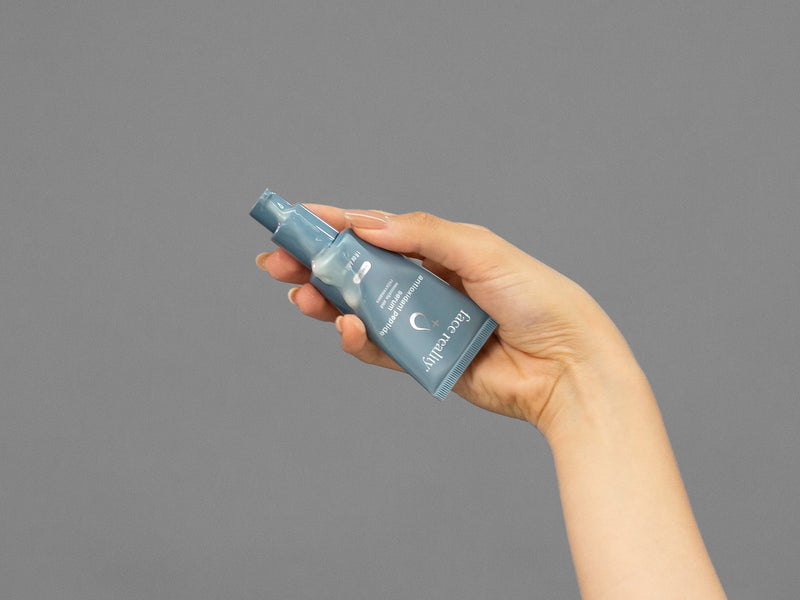
  • Face Reality

    Antioxidant Peptide Serum

    4.8 out of 5.0 stars

    $56.00

  • Environ

    $72.00

  • Environ

    From $86.00

  • Pavise

    Bioadaptive Stress Repair

    4.6 out of 5.0 stars

    From $50.00

  • Biojuve

    Biojuve Travel Kit

    4.5 out of 5.0 stars

    $70.00

  • SkinBetter Science

    BioRewind

    5.0 out of 5.0 stars

    From $135.00

  • Young Goose

    From $35.00

  • Plated

    $338.00

  • iS Clinical

    $75.00

  • Revision

    From $120.00

  • Environ

    From $138.00

  • Alastin

    C-Radical Defense Antioxidant Serum

    4.8 out of 5.0 stars

    $218.00

  • Plated

    Calm Serum

    5.0 out of 5.0 stars

    $258.00

More Skin Concern Guides

View all

Illustration of a young woman with fair skin, with small dark blackheads across her nose and tiny pale whiteheads on her forehead.
  • by Laziza Strait

Blackheads and Whiteheads: What Clogs a Pore and How to Clear It

Blackheads and whiteheads are clogged pores that have not turned red or sore. Here is what forms the plug, why many nose blackheads are something else, and how to clear them.

Read moreabout Blackheads and Whiteheads: What Clogs a Pore and How to Clear It

Close illustration of the eyes of a South Asian woman with medium-brown skin, with darker brown-purple shadows beneath both eyes.
  • by Laziza Strait

Dark Circles: What Causes Them and What Skincare Can Change

Dark circles come from extra pigment, blood vessels showing through thin skin, or shadow from a hollow under the eye. Here is how to tell which you have and what skincare can change.

Read moreabout Dark Circles: What Causes Them and What Skincare Can Change

Illustration of an East Asian woman in her late fifties with fine crisscross lines on her cheek, beside a magnified circle showing stiff, tangled collagen fibres.
  • by Laziza Strait

Glycation: How Sugar Stiffens Skin and What Can Slow It

Glycation is sugar bonding to the collagen in your skin, leaving it stiffer and more yellow over the years. Here is how it happens, what speeds it up and what can slow it down.

Read moreabout Glycation: How Sugar Stiffens Skin and What Can Slow It