Waking up puffy can make you look tired for hours, however well you slept. Caffeine, applied topically, works on the small blood vessels under the thin skin around your eyes, which helps morning puffiness settle sooner and softens the bluish shadow those vessels cast.

The short answer

Expect a quick, temporary improvement in morning puffiness, and a gradual softening of a bluish tint with daily use. Caffeine reaches the skin under your eyes within minutes. Part of what you see in the morning comes from the cooling gel caffeine is usually in, which is why we suggest a caffeine eye gel first thing in the morning.

Two skin cross-sections: wide coral blood vessels under thin skin, then the same vessels narrower with teal caffeine dots around them.
Caffeine narrows the small vessels under thin eye skin, which leaves less blood near the surface and a lighter bluish tint.

What it does

Expect a quick, temporary improvement in morning puffiness, and a gradual softening of a bluish tint with daily use. Caffeine reaches the skin under your eyes within minutes. Part of what you see in the morning comes from the cooling gel caffeine is usually in, which is why we suggest a caffeine eye gel first thing in the morning.

Why eyes puff up and circles look dark

The skin under your eyes is some of the thinnest on your body. Small blood vessels and the muscle that circles the eye show through it, which is what gives some dark circles their blue or purple tint.

The area also collects fluid easily, especially overnight and after a salty meal, a short night, allergies or crying. Tiny lymphatic vessels drain that fluid away. Over years of sun exposure, UV light can damage those lymphatic vessels, which is one reason some people develop puffiness that lasts all day as they get older. All-day fullness under the eyes is not always eye bags.

Dark circles have several causes: excess pigment, visible blood vessels, a shadow cast by a hollow, and fluid. Many people have more than one, and the cause decides which ingredient will help. Prostaglandin analogs, found in some lash growth serums and prescription glaucoma drops, can thin the fat around the eyes and deepen a hollow. Check the ingredient list of any lash serum you use, and never stop a prescription drop without your doctor.

How caffeine works

Your body makes a messenger called adenosine, and one of its jobs is to relax small blood vessels, which widens them. Caffeine blocks the receptors adenosine works through, and the vessels narrow. That narrowing has been measured most clearly with caffeine taken by mouth. In one study, a dose similar to two cups of coffee reduced blood flow in the skin within 30 minutes.

Caffeine dissolves in water and passes through skin, partly by traveling down hair follicles. In one study, caffeine applied topically showed up in the blood about five minutes later. Under the eyes, narrower vessels hold less blood close to the surface. The bluish tint softens, and swelling can settle sooner.

Caffeine is also an antioxidant, which means it helps neutralize the unstable molecules UV light creates in your skin.

Where caffeine comes from

Caffeine is made by a number of plants, including coffee, tea, cacao, kola nuts and mate. Plants make it partly as a defense, because at the levels found in their leaves and seeds it is toxic to many of the insects that would eat them.

The caffeine in skincare is either recovered when coffee and tea are decaffeinated or made in a lab. It is the same molecule either way.

Four crescent shapes showing brown pigment, visible vessels, a shadowed hollow and fluid droplets, with check marks on vessels and fluid.
Dark circles have different causes. Caffeine helps when blood vessels or fluid are behind them, and not with pigment or a hollow.

What the research shows

A 2016 review of under-eye dark circles names topical caffeine for circles caused by visible blood vessels and for swelling. The studies behind that are small.

In a double-blind study of 34 young adults who stayed awake overnight, a 3 percent caffeine gel and the same gel without caffeine both reduced puffiness over three hours, by a similar amount. The caffeine gel did better than the plain gel in 8 of the 34 people. The researchers concluded that cooling from the gel did much of the work, and that people respond to caffeine differently. This is worth knowing, because the format of a caffeine product matters as much as the caffeine.

In a smaller study, 11 women used a pad with 3 percent caffeine and 1 percent vitamin K under one eye and a water pad under the other. After four weeks, dark circles and wrinkle depth looked better on the caffeine side, a result that belongs to the combination rather than to caffeine alone.

What to look for on a label

A gel for the morning

Format changes what you notice. A gel feels cool as it evaporates, which helps morning puffiness. Some come with a stainless steel roller applicator, whose gentle pressure helps fluid drain while the cool steel helps you look awake sooner. A caffeine eye cream adds more moisture, which suits drier under-eye skin and your evening routine.

On an ingredient list it appears simply as caffeine. The eye studies used 3 percent, and most products do not state a figure.

Where it sits in your routine

A caffeine eye gel or eye cream goes on after cleansing and any serum, before your moisturizer.

What works best with caffeine

Caffeine works on blood vessels and fluid, which means it does not compete with ingredients doing other jobs around the eyes. Peptides work on firmness and fine lines, and the two are often found together in morning eye products. Hyaluronic acid hydrates thin under-eye skin, and green tea adds more antioxidant protection.

Sunscreen every morning, reapplied through the day, along with sunglasses, protects the thin skin around your eyes and the lymphatic vessels that drain it.

Common questions

Will drinking coffee do the same thing?

Not in a predictable way. Caffeine you drink does narrow small blood vessels in your skin for a while. What has not been studied is whether drinking coffee changes puffiness or dark circles. Caffeine taken by mouth spreads through your whole body, and applying it topically is how you put it where you want it.

Enjoy your coffee for its own sake. If a late cup costs you sleep, that tends to show under your eyes: in one study, faces photographed after a night without sleep were rated as having puffier eyes and darker circles.

Does caffeine help with cellulite?

A little, based on the research available, and the evidence is weak. A 2014 review of seven controlled trials of anti-cellulite creams, many containing caffeine or related compounds, found thighs about half a centimeter smaller than with a comparison cream, and results varied a lot between studies. Cellulite comes from the structure of the fat and connective tissue under the skin, and a cream does not directly change that structure.

How soon will I see something?

For puffiness, often within the same morning, especially with a cooling gel, and the effect is temporary. For a bluish tint, give it four to eight weeks of daily use. Photograph your skin on day one in natural daylight, in the same spot, then every four weeks, because gradual change is easier to see side by side.

Is it safe in pregnancy?

Caffeine applied topically has not been studied in pregnancy, which is true of most skincare ingredients, since they are not tested on pregnant people. Only a small amount reaches the bloodstream from a skincare product. Check with your OB or midwife before starting anything new.

Sequence of a coffee branch and tea sprig, a pale caffeine crystal, and a plain gel jar with a steel roller tip, joined by arrows.
Caffeine comes from plants such as coffee and tea, or is made in a lab. Either way, the purified molecule is the same.

How to use it

  • Use your caffeine eye gel every morning, when puffiness is usually at its most noticeable.
  • Pat a rice-grain amount for each eye along the bone under your eye, away from the lash line.
  • If your gel has a stainless steel roller, glide it from the inner corner out toward your temple with light pressure.
  • If your packaging allows it, keep your eye gel in the fridge for extra cooling.
  • Broad spectrum SPF 30 or higher every morning, reapplied through the day, with sunglasses outdoors.
Evidence and sources
  • Vrcek I, Ozgur O, Nakra T. Infraorbital Dark Circles: A Review of the Pathogenesis, Evaluation and Treatment. Journal of Cutaneous and Aesthetic Surgery, 2016;9(2):65-72. Review of the causes of dark circles, naming topical caffeine for circles caused by blood vessels and for swelling. Read the study
  • Amnuaikit T, Maneenuan D, Boonme P. Evaluation of Caffeine Gels on Physicochemical Characteristics and In Vivo Efficacy in Reducing Puffy Eyes. Journal of Applied Pharmaceutical Science, 2011;1(2):56-59. The double-blind puffiness study in 34 volunteers after a sleepless night. Read the study
  • Ahmadraji F, Shatalebi MA. Evaluation of the clinical efficacy and safety of an eye counter pad containing caffeine and vitamin K in emulsified Emu oil base. Advanced Biomedical Research, 2015;4:10. The single-blind study in 11 women. Read the study
  • Melik Z, Princi T, Grill V, Cankar K. The effect of caffeine on cutaneous postocclusive reactive hyperaemia. PLoS ONE, 2019;14(4):e0214919. 200 mg of caffeine taken by mouth reduced resting skin blood flow at 30 and 60 minutes, attributed mainly to blocking adenosine receptors. Read the study
  • Otberg N, Patzelt A, Rasulev U, et al. The role of hair follicles in the percutaneous absorption of caffeine. British Journal of Clinical Pharmacology, 2008;65(4):488-492. Caffeine applied to the skin reached the blood within about five minutes, helped by hair follicles. Read the study
  • Herman A, Herman AP. Caffeine's Mechanisms of Action and Its Cosmetic Use. Skin Pharmacology and Physiology, 2013;26(1):8-14. Review of caffeine in skincare, including its antioxidant activity and its use in anti-cellulite products. Read the study
  • Turati F, Pelucchi C, Marzatico F, et al. Efficacy of cosmetic products in cellulite reduction: systematic review and meta-analysis. Journal of the European Academy of Dermatology and Venereology, 2014;28(1):1-15. Pooled results from seven controlled trials of anti-cellulite creams. Read the study
  • Kajiya K, Hirakawa S, Detmar M. Vascular endothelial growth factor-A mediates ultraviolet B-induced impairment of lymphatic vessel function. American Journal of Pathology, 2006;169(4):1496-1503. Mouse research on UV damage to the lymphatic vessels that drain fluid from skin. Read the study
  • Sundelin T, Lekander M, Kecklund G, et al. Cues of fatigue: effects of sleep deprivation on facial appearance. Sleep, 2013;36(9):1355-1360. Faces after sleep deprivation were rated as having puffier eyes and darker circles. Read the study
  • Abalo-Lojo JM, VΓ‘zquez Ferreiro P, Knight Asorey M, et al. Improvement of Prostaglandin-Associated Periorbitopathy after Discontinuing Treatment. Turkish Journal of Ophthalmology, 2023;53(1):8-12. Prostaglandin eye drops and loss of fat around the eyes, which improved partly after stopping. Read the study
  • Nathanson JA. Caffeine and related methylxanthines: possible naturally occurring pesticides. Science, 1984;226(4671):184-186. Why plants make caffeine. Read the study

A note on the evidence. How caffeine narrows blood vessels is well understood, and the clearest measurements come from caffeine taken by mouth. The under-eye studies are small and short, and one found that the cooling gel did much of the work on puffiness. The body research on cellulite shows a small, inconsistent effect. The link between UV and lasting puffiness comes from mouse research and matches what we see in the clinic.

Products with Caffeine

  • Face Reality

    Antioxidant Peptide Eye Gel

    4.5 out of 5.0 stars

    $48.00

  • Marini SkinSolutions

    CelluliTx

    5.0 out of 5.0 stars

    $140.00

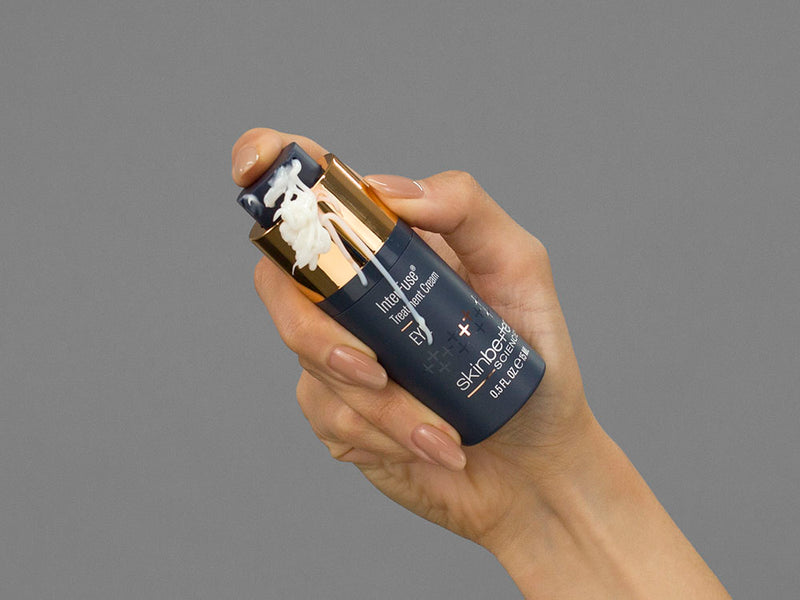
  • SkinBetter Science

    InterFuse Treatment Cream EYE

    5.0 out of 5.0 stars

    $135.00

  • Alastin

    TransFORM Body Treatment

    5.0 out of 5.0 stars

    From $110.00

More Ingredient Guides

View all

German chamomile flowers beside a slate blue dish holding drops of clear, pale golden oil on a warm stone surface.

Bisabolol for Calming Redness and Irritation

Bisabolol is the calming compound first found in chamomile, and it quiets the inflammation behind redness, stinging and itch. Here is how it works, who it suits and how to use it.

Read moreabout Bisabolol for Calming Redness and Irritation

Fresh comfrey leaves and purple flowers beside a slate blue dish of fine white allantoin powder on a warm stone surface.

Allantoin for Rough, Dry and Irritated Skin

Allantoin softens rough, flaky skin and soothes irritation, and the US FDA recognizes it as a skin protectant. Here is how it works, what the research shows and how to use it.

Read moreabout Allantoin for Rough, Dry and Irritated Skin

Fresh centella sprigs with small round scalloped leaves on a warm stone surface beside a slate blue ceramic dish, against a soft blush backdrop.

Centella for Redness and Reactive Skin

Centella calms inflammation, helps skin hold on to water and supports repair after irritation. Here is what the research shows, what cica means on a label and how to use it.

Read moreabout Centella for Redness and Reactive Skin