When your skin runs short on water, the cells on its surface stop shedding evenly and pile up into rough, flaky patches on your heels, elbows and shins. Your skin already makes urea to hold on to water. Applied topically, urea pulls water back into that surface layer and softens the buildup, which leaves skin smoother.

The short answer

Urea hydrates your skin and supports your barrier at every strength, and higher strengths also loosen thick buildup on heels and elbows. Expect softer skin within the first week and smoother rough patches with steady daily use. It suits dry skin on your face and body, in the strength made for each area.

Diagram of the outer skin layer as a wall of cells, with urea dots holding water droplets and channels carrying urea into the cells.
Urea moves into the outer layer of your skin and binds water there, and your skin cells carry it inside through their own channels.

What it does

Urea hydrates your skin and supports your barrier at every strength, and higher strengths also loosen thick buildup on heels and elbows. Expect softer skin within the first week and smoother rough patches with steady daily use. It suits dry skin on your face and body, in the strength made for each area.

Why skin turns rough and dry

The outer layer of your skin holds water in two ways. Inside the cells, water-attracting substances called natural moisturizing factor bind it, and urea is one of them. On the surface, a thin layer of oils and fats helps stop that water from evaporating. Dry skin makes too little oil, which means it struggles to hold water as well.

Water also controls shedding, because the natural enzymes that loosen old surface cells need water to work. When skin is dehydrated, those cells stay stuck together and pile up into the rough, flaky texture you can feel on dry shins and elbows. On heels, pressure from walking adds even more layers.

How urea works

Urea is a very small molecule, which lets it move easily into the outer layer of your skin and bind water there, the same way your own urea does. Better-hydrated cells shed more evenly, and skin feels softer.

Skin cells also have channels that carry urea inside them. In a small study of 21 volunteers, funded by a company that sells urea products, urea creams used once a day for four weeks raised the activity of genes your skin uses to build its barrier and its own defenses against bacteria. The 20 percent cream also cut the water escaping through the skin by about a third.

At higher strengths, urea loosens the bonds that hold keratin, the tough protein inside your surface cells, tightly packed. That lets thick, rough buildup soften and come away more easily. It is the reason strength matters with urea, as covered in the What to look for on a label section below.

Where urea comes from

Your body makes urea when it breaks down protein, and your skin keeps some of it in its outer layer as part of its natural moisturizing factor.

The urea in skincare is not taken from people or animals. It is made in a lab from ammonia and carbon dioxide, and it is the same molecule your skin makes.

Two panels: a thick, uneven pile of dry flakes on the skin surface, then the same skin smooth and hydrated with loose flakes lifting away.
At higher strengths, urea loosens the tightly packed buildup on rough areas such as heels, which lets that skin soften and smooth out.

What the research shows

Urea has decades of research in dry and eczema-prone skin. In one trial, 172 people whose eczema had just cleared used either a 5 percent urea cream or a comparison cream every day. After six months, 26 percent of the urea group were still eczema-free, compared with 10 percent of the comparison group, and flares took longer to return.

On dry, rough feet, urea is the most studied moisturizing ingredient. A 2017 review found it in 14 of 22 studies, though the authors rated the studies average or poor in quality and could not recommend one ingredient over another.

What to look for on a label

Use the strength made for the area

Urea behaves differently at different strengths. Face moisturizers, serums and masks use lower strengths, where urea mainly hydrates and supports your barrier. From about 10 percent, urea also softens thickened skin, and these strengths are mostly body products made for rough elbows, knees and feet. The strongest urea creams are made for thick calluses on heels and for nails.

A higher number is a product built for a different job, not a stronger version of the same one. Use the strength made for the area, and stay with it while your skin is still improving.

Where it sits in your routine

Most urea products are moisturizers, lotions or creams, which go on as your moisturizer step. A urea serum goes on after cleansing and before your moisturizer.

What works best with urea

Glycerin and hyaluronic acid are humectants too, which means they draw water in alongside urea. Ceramides, cholesterol and fatty acids, the three main fats in your barrier, help keep that water from escaping, as do oils and fats such as shea butter. Lactic acid is also part of natural moisturizing factor, and urea and lactic acid are often combined in body lotions for rough skin.

Higher-strength urea adds to the exfoliation in your routine. If you also use a retinoid or an exfoliating acid on the same area, the total load is what your skin experiences, and using them on different nights is easier on your barrier.

Sunscreen every morning, reapplied through the day, because urea does not protect your skin from UV.

Common questions

Will urea sting?

Sometimes, mostly at higher strengths and on skin that is broken or very irritated. In a trial of 197 people with eczema-prone skin, about a quarter rated the smarting from a cream with 4 percent urea and salt as moderate or severe.

Mild, brief irritation is the most common complaint. Stinging above that, or lingering redness, means you are using it too often or at too high a strength for your skin barrier.

Can I use urea on my face?

Yes, in products made for the face, which use the lower strengths. Keep foot and callus creams for your feet.

Will it help my eczema?

Yes, with the dryness and barrier weakness that come with eczema, which is a barrier problem too. Moisturizing every day, including when your skin looks clear, strengthens your barrier between flares, which is what the relapse trial measured.

Urea works alongside whatever your doctor has given you rather than replacing it.

How soon will I see something?

Skin usually feels softer within a few days of daily use. Rough, thickened areas such as heels and elbows take longer, which is why we suggest four weeks of daily use before you judge the result.

Photograph your skin on day one, in the same spot and in natural daylight, then every four weeks, and compare the photos side by side.

Is urea safe in pregnancy?

Generally yes. Urea is a substance your own body makes. Like most skincare ingredients, it has not been tested on pregnant people, which is why we suggest checking with your OB or midwife first.

Two clouds of dots with arrows into a laboratory flask, and an arrow from the flask to a small pile of white crystals.
The urea in skincare is made in a lab from ammonia and carbon dioxide, and it is the same molecule your skin makes itself.

How to use it

  • Use lower-strength urea once or twice a day, every day. There is nothing to build your tolerance up to with low-strength urea.
  • Apply body lotion after a shower, onto clean skin, and use a little more on your driest areas.
  • For thick, rough heels, apply a urea foot cream at night and wear cotton socks over it.
  • Wash your hands after using a higher-strength urea cream, unless your hands are the area you are caring for.
  • Keep using urea once your skin feels smooth. Dry skin needs barrier care for good, not only for a few weeks.
  • Broad spectrum SPF 30 or higher every morning, reapplied through the day.
Evidence and sources
  • Piquero-Casals J, et al. Urea in Dermatology: A Review of its Emollient, Moisturizing, Keratolytic, Skin Barrier Enhancing and Antimicrobial Properties. Dermatology and Therapy, 2021;11(6):1905-1915. Natural moisturizing factor, the keratolytic effect, the strengths used on different areas, wound care history and tolerability. Read the review
  • Grether-Beck S, Felsner I, Brenden H, et al. Urea uptake enhances barrier function and antimicrobial defense in humans by regulating epidermal gene expression. Journal of Investigative Dermatology, 2012;132(6):1561-1572. The 21-volunteer study, funded by a company that sells urea products. Read the study
  • Γ…kerstrΓΆm U, Reitamo S, Langeland T, et al. Comparison of Moisturizing Creams for the Prevention of Atopic Dermatitis Relapse: A Randomized Double-blind Controlled Multicentre Clinical Trial. Acta Dermato-Venereologica, 2015;95(5):587-592. The relapse trial. Read the study
  • LodΓ©n M, Andersson AC, Bergbrant IM, et al. A double-blind study comparing the effect of glycerin and urea on dry, eczematous skin in atopic patients. Acta Dermato-Venereologica, 2002;82(1):45-47. The 197-person trial. Read the study
  • Parker J, Scharfbillig R, Jones S. Moisturisers for the treatment of foot xerosis: a systematic review. Journal of Foot and Ankle Research, 2017;10:9. The dry feet review. Read the review
  • Pan M, Heinecke G, Bernardo S, Tsui C, Levitt J. Urea: a comprehensive review of the clinical literature. Dermatology Online Journal, 2013;19(11). Clinical uses and side effects across 81 publications. Read the review
  • Rawlings AV, Harding CR. Moisturization and skin barrier function. Dermatologic Therapy, 2004;17(Suppl 1):43-48. Natural moisturizing factor and how water affects shedding.

A note on the evidence. Urea has been studied in people for decades, including randomized trials in eczema-prone skin, though many of those trials are small and some were funded or run by companies that make urea products. The gene findings come from one small study in 21 healthy volunteers, and the research on dry feet is plentiful but mostly of average or poor quality. The strength ranges reflect how dermatology reviews describe urea being used, rather than trials comparing every strength against each other.

Products with Urea

  • Marini SkinSolutions

    $145.00

  • Environ

    $126.00

  • Environ

    $84.00

  • Vivant

    Mandelic Acid Serum

    5.0 out of 5.0 stars

    From $84.00 Sold out

  • Vivant

    $177.00

  • Hydrinity

    Restorative HA+ Mask

    4.4 out of 5.0 stars

    $120.00

  • SkinBetter Science

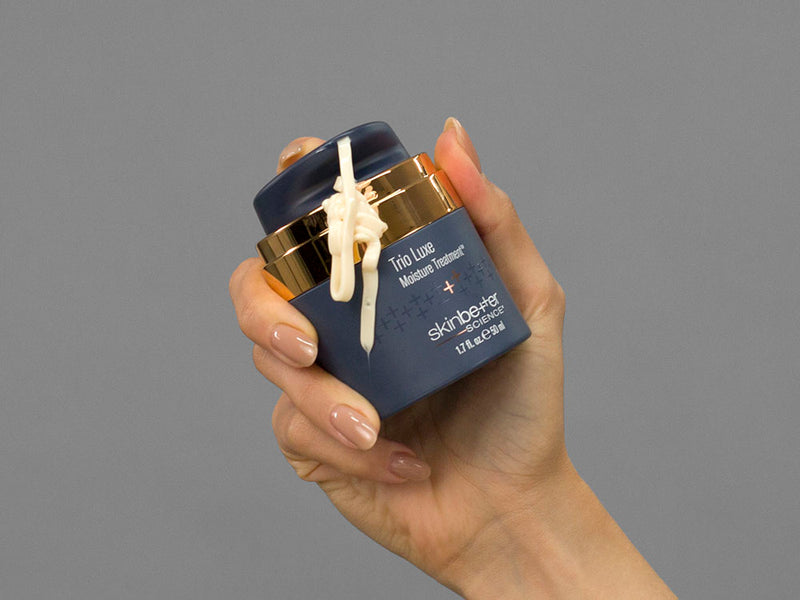
    Trio Luxe Moisture Treatment

    4.9 out of 5.0 stars

    From $64.00

  • SkinBetter Science

    Trio Rebalancing Moisture Treatment

    4.9 out of 5.0 stars

    From $54.00

More Ingredient Guides

View all

German chamomile flowers beside a slate blue dish holding drops of clear, pale golden oil on a warm stone surface.

Bisabolol for Calming Redness and Irritation

Bisabolol is the calming compound first found in chamomile, and it quiets the inflammation behind redness, stinging and itch. Here is how it works, who it suits and how to use it.

Read moreabout Bisabolol for Calming Redness and Irritation

Fresh comfrey leaves and purple flowers beside a slate blue dish of fine white allantoin powder on a warm stone surface.

Allantoin for Rough, Dry and Irritated Skin

Allantoin softens rough, flaky skin and soothes irritation, and the US FDA recognizes it as a skin protectant. Here is how it works, what the research shows and how to use it.

Read moreabout Allantoin for Rough, Dry and Irritated Skin

Fresh centella sprigs with small round scalloped leaves on a warm stone surface beside a slate blue ceramic dish, against a soft blush backdrop.

Centella for Redness and Reactive Skin

Centella calms inflammation, helps skin hold on to water and supports repair after irritation. Here is what the research shows, what cica means on a label and how to use it.

Read moreabout Centella for Redness and Reactive Skin